


There are several things that I hold strong views about. But today I will name just three of them. One, I believe that Nigeria must be a united country to be stable and progressive. That is why I do not, cannot, will not support any movement for the bifurcation or trifurcation of Nigeria.
All those who call themselves separatists, who want to have Nigeria split into several countries will never find me in their corner. I believe that a big Nigeria is better than a small Nigeria. That is part of the reason that China and India are resilient today. They have a large population and land mass to help them weather the storms, political storms, economic storms and climate storms. But I want a united Nigeria that works for everyone, that works for fairness, equity and justice for all.

Two, I believe in the rotation of power between north and south. If rotation works the country will work. God in His infinite wisdom gave different assets to different regions of Nigeria. If crude oil and gas were found within the territory occupied by the majority tribes Nigeria would have split a long time ago. They would have used their majority power to perfect injustice against the minority tribes. But God placed these assets largely in the minority tribes so that Nigeria can remain united.
That is my belief. And eventhough I am from the Niger Delta region I have never in my 51 years of journalism practice advocated that the people of that region should own the oil and gas assets one hundred percent. That would not make for a united country. But some selfish politicians have said that since they have the numbers they should hold on to power for ever because democracy is a game of numbers. My answer to that is if you hold on to power don’t you think other people can also hold on to what they have because power is infact divisible.
Three, I believe that Nigeria’s democracy will only be largely stable and progressive if we evolve into a two-party entity basically. Being a two party entity does not mean there will be no other parties but a situation where we have scores of parties is rubbish, rubbish because they will never have the ability to achieve anything or to make any significant contribution to the evolution of our democracy. So the conversation about the ruling APC growing into a near behemoth and posing the possibility of becoming the only dominant party in the country is an important conversation.
However, the emergence of the African Democratic Congress (ADC) as a coalition that seeks, according to its proponents, to “rescue Nigeria from bad governance” is something of interest to those who wish to see two formidable parties in the country. This is not the first time that the ADC has been chosen as a rallying canopy to seek to overthrow a sitting government. In 2018, former President Dr Olusegun Obasanjo had packaged what he called the Coalition for Nigeria Movement (CNM) to challenge the President Muhammadu Buhari government in the 2019 general election. It failed to unseat Buhari who won a second term as President. The present coalition which seeks to defeat President Bola Tinubu in 2027 seems to be an imitation of what happened in 2013 when Tinubu, leader of the Action Congress of Nigeria (CAN) stitched together four parties namely CAN, APA, ANPP and a faction of APGA to form the APC. That coalition led to the defeat of Dr Goodluck Jonathan in the 2015 election. That became the first time that a sitting government at the centre would be defeated in an election by an opposition party. The fellows responsible for the ADC coalition apparently believe than an encore is possible and that the Tinubu government can be defeated in 2027. If Tinubu is defeated in 2027 it would mean that Nigeria is, once again, becoming a democracy with two strong parties.
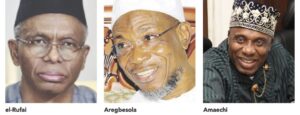
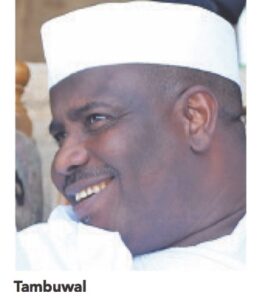
Let us look at the faces and facts behind the ADC coalition. The most prominent proponents are former Vice President, Atiku Abubakar, Labour Party Presidential Candidate in 2023 election, Peter Obi, former Senate President, David Mark, former Osun State Governor, Rauf Aregbesola, former former Governor of Rivers State and former Minister of Transport, Rotimi Amaechi, former Governor of Kaduna State, Nasir El-Rufai and former Governor of Sokoto State, Aminu Tambuwal. All of them had been in positions of power in the states or Centre either as Vice President, Governor, Minister or Senator. That is why some analysts describe them as “old wine in new bottles.” Some critics feel that they had enormous opportunities in those positions they occupied over the years to make significant transformational contributions to Nigeria’s development. They belonged to either of the two parties PDP and APC which have ruled Nigeria since 1999. If Nigeria is in a state where rescue is needed today shouldn’t they bear part of the blame? They should. The other question would be when they were in positions of authority what did they do to ensure that Nigeria did not sink into a hole, that warrants its being dug out of the hole today?
Since none of them is a new face in governance, since all of them had played important parts in governance in the past what is the level of credibility that they have when they say that they are here on a rescue mission from bad governance? Did this bad governance start only in the last two years that all of them have been out of power? In any case, when they were in power, can their achievements be regarded as overwhelmingly justifiable or justifiably overwhelming? Or is there any visible evidence that they have turned a new leaf that will enhance their performance if Nigerians decide to vote for them in 2027? Nigerians would like to know if they are truly agents of change. Did they cause a review of the 1999 Constitution to be made, an issue that Nigerians have called for since 1999? Did they cause the economy to grow? Did we make by their effort money from solid minerals that are exploited in the 774 local government areas by illegal miners? What improvements did they bring about in agriculture so that we do not continue to import ship loads of food or stay hungry? Did they succeed in getting Nigeria to bring on board new measures to stem the growing tide of insecurity in various parts of the country? What contributions did they make towards the drastic reduction of poverty and unemployment in the country? As people who had played significant parts in the governance of the country they have a trust deficit to deal with. It is not simply a matter of wanting to remove Tinubu. It is not simply a matter of criticizing Tinubu. That isthe easy part. The important part is for them to convince us with facts and figures, with solid verifiable evidence that they have an alternative policy option that can rescue Nigeria on several developmental fronts. It is not simply a matter of rhetorics. That is the big challenge that they must overcome, the challenge of believability.
They come from basically PDP which is in tatters, the LP which has problems and some of them are APC rebels. If they come from parties that have not been able to manage successfully the crises in their parties, how can they convince Nigerians that they are well equipped to run a country which is a bigger entity effectively, efficiently? That is a challenge they have.
Most of the prominent persons in the group want to become President of Nigeria. They need pure magic to be able to manage these conflicting ambitions so that the group can maintain sanity and work towards its goal. And only one person can be Nigeria’s president at a time. Will these ambitions of the principal promoters not be a hindrance to the successful prosecution of their agenda? That is something they must work on if they want Nigerians to trust them.
Finally, Nigeria needs two strong parties for its democracy to work efficiently and to make the government transparent and accountable to the people. Will the ADC be the new messiah, the medium that will take us to eldorado? I don’t know.
The post Coalition: Too many unknowns appeared first on The Sun Nigeria.


