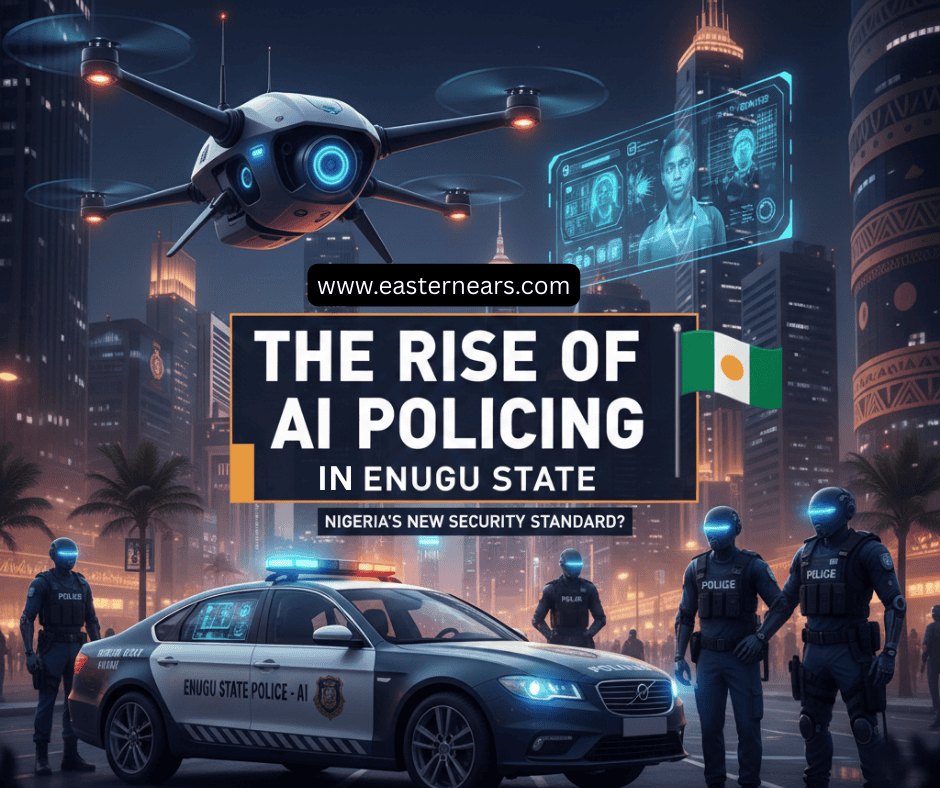
In a bold move, reshaping its security landscape, Enugu State has decisively pivoted toward a technology-driven approach. Governor Peter Mbah’s administration, driven by a goal to grow the state’s economy from $\$4.4$ billion to a formidable $\$30$ billion, recognized that security is the fundamental bedrock for investment and prosperity. His signature initiative—deploying sophisticated AI policing infrastructure—has sparked national conversation, positioning the state as a potential blueprint for security reform across Nigeria.
The Heart of the Project: AI Surveillance and Real-Time Command
The centerpiece of this massive security overhaul is a state-of-the-art Command and Control Centre, widely recognized by security experts as one of the most modern in the country. This centre acts as the nerve system for the entire state’s security architecture.
Technological Deployment Explained:
- Intelligent Vehicle Fleet: Over 100 security vehicles are equipped with advanced, high-resolution surveillance cameras. Crucially, many of these cameras are AI embedded, providing them with capabilities far beyond simple recording.
- Predictive Policing Capacity: The AI system is designed for sophisticated analytics, including facial recognition and license plate recognition. This allows security operatives, especially those in the special Distress Response Squared (DRS) unit, to not only monitor events but to track known suspects, identify suspicious patterns, and even predict potential hotspots.
- Data Driven Response: Fibre optic cables connect the extensive network of cameras across the state back to the Command Centre. This connectivity ensures that information is processed in real time, enabling security agencies to dispatch teams with speed and precision, moving from a reactive model to a proactive one. DRS operatives also wear bodycams, ensuring transparency and proper monitoring of operations.
How This Intervention Benefits the Enugu People
The direct benefits of this AI policing framework for Enugu residents are profound, extending far beyond simply reducing crime statistics.
1. Economic Restoration and Investment:
The most significant benefit lies in the restoration of a secure business environment. Investors—local and foreign—demand assurance that their personnel and assets are safe. The visible deployment of cutting-edge security technology signals stability, which is indispensable for attracting the Foreign Direct Investment (FDI) needed to achieve the state’s ambitious economic targets. Local businesses, previously paralysed by uncertainty, can now operate freely, spurring job creation and economic activity.
2. Enhanced Public Safety and Confidence:
AI-enabled surveillance offers a powerful deterrent to criminal elements. Knowing that their movements can be tracked via facial and number plate recognition makes criminals less likely to operate within the state. This heightened level of monitoring gives residents and commuters a newfound sense of safety, encouraging a return to normal social and commercial activities. The goal is to make the state not just safe, but to make residents feel safe.
3. Quicker Emergency Response:
A centralized Command Centre receiving real-time intelligence from the fleet and fixed cameras ensures a drastically reduced emergency response time. In a critical situation, minutes can save lives or property. Data-driven insights allow security forces to deploy resources precisely where they are needed, rather than engaging in guesswork.
Other Key Security Interventions and Their Impact
Governor Mbah’s strategy is a multi-faceted approach that combines technology with social and political determination.
Ending the Reign of Illegal Stay-at-Home Orders
- The Intervention: One of the governor’s earliest and most decisive actions was issuing a marching order to end the crippling illegal sit-at-home orders that had severely damaged the state’s economy, costing an estimated N10 billion every Monday. He followed this up by mobilising security agencies and applying strong measures against noncompliant businesses. Interested readers can find more information about the governor’s stance on this issue and the actions taken to consign ‘sit at home’ to a painful past on YouTube.
- Benefit to the People: This intervention immediately restored the five-day work week, reversing massive revenue losses and preventing businesses from relocating out of the state. The return of commerce on Mondays revitalized markets and schools, directly contributing to the state’s overall GDP and restoring the livelihood of countless traders and workers.
Establishing the Security Trust Fund
- The Intervention: The Security Trust Fund was established and signed into law, with a target of raising over N20 billion over four years. This fund is managed by a committee comprising private sector experts and is designed to create a sustainable, dedicated source of funding for security infrastructure.
- Benefit to the People: Relying solely on government budgetary allocations for security is often insufficient. The Trust Fund allows corporate entities and well-meaning indigenes to contribute, creating a collective ownership of the state’s security. This steady funding stream ensures the continued maintenance and upgrade of high-cost equipment like the AI-enabled cameras and vehicles, guaranteeing the longevity of the security strategy.
Investing in Security Training and Welfare
- The Intervention: Beyond equipment, the administration prioritised the human element. The government provides security personnel with necessary facilities, training, and welfare support, including insurance coverage for security casualties and establishing a fund for their families.
- Benefit to the People: Well-equipped, highly motivated, and professionally trained security personnel translate directly into a more effective and humane policing service. This focus on capacity development ensures that the advanced technology is managed by competent individuals, solidifying the gains made in the fight against crime.
Conclusion
Enugu State, through the decisive action of Governor Mbah, offers a powerful demonstration of how smart technology can fundamentally alter the security narrative. This integration of AI policing, real-time command, and robust institutional support moves the state from being reactive to being proactively secure. The transformation is not just about reducing crime statistics; it is about building the stable, predictable environment essential for realizing the ambitious $\$30$ billion economic vision. Other states must seriously examine this innovative model. The successful deployment of this cutting-edge system in Enugu may very well signal the dawning of a new, digitally fortified era for security across the entire nation.