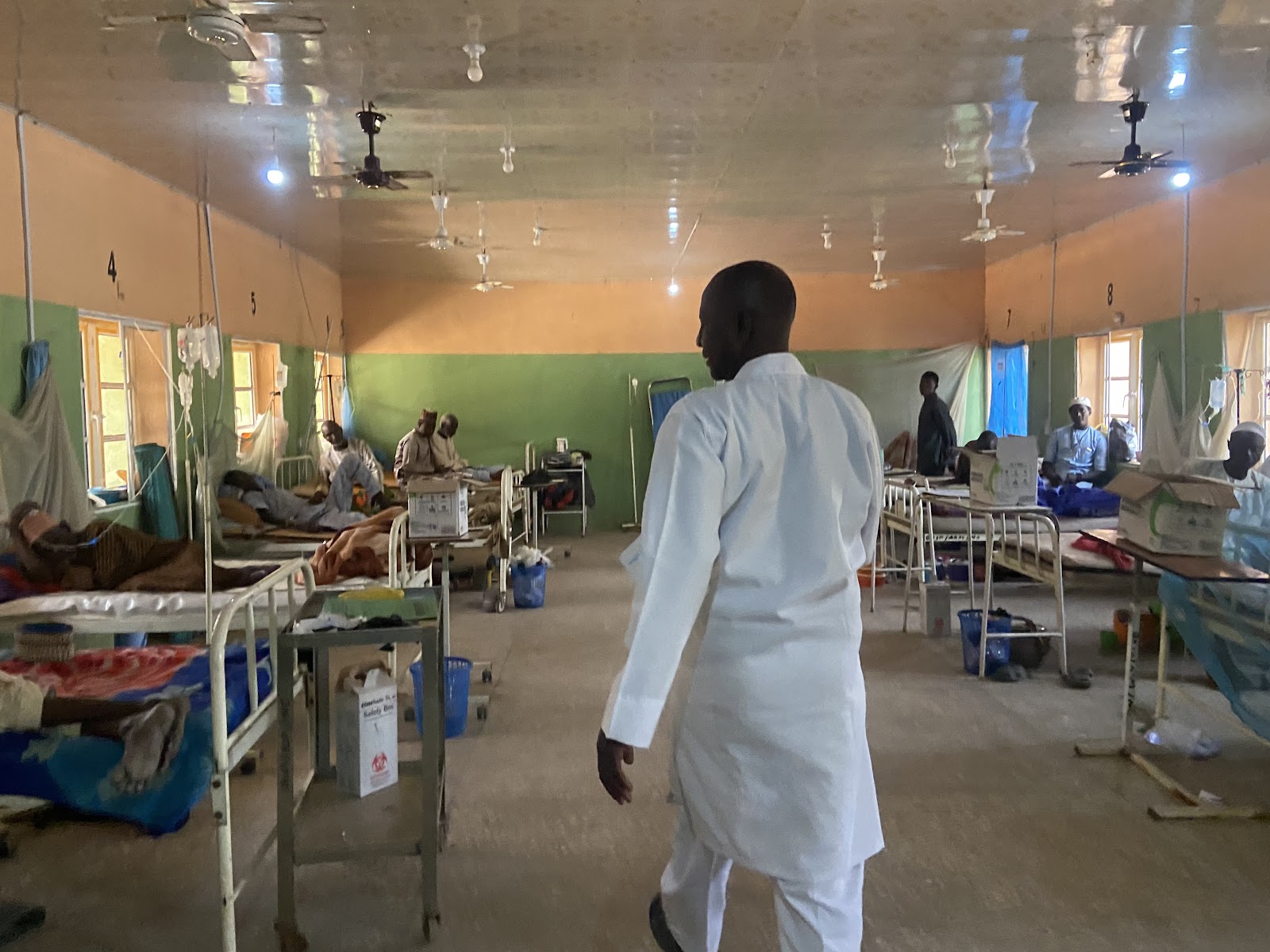
• FG’s intervention strategy remains elusive
“For instance, an antibiotic like Ceftriazone injection, which was sold for N200 in 2023, is now sold for between N800 and N1,000. Also Rocephin injection that used to be N3,000, is now sold for between N10,000 and N12,000.
“The increase in the prices of drugs is more than 300 per cent. It started about three years ago, towards the end of the Buhari’s administration.”
By Kehinde Aderemi
Blessing Ademola, a Lagos-based teacher had enjoyed robust health until January 2020, when she faced a major health challenge that almost led to her demise during the COVID-19 global health crisis. Her condition relapsed due to her inability to afford the drugs prescribed for her health condition.
For five years, the mother of two frequently visited different hospitals in Lagos, and the situation worsened recently when she collapsed and nearly lost her life.
Narrating his experience, Blessing’s husband, John Ademola, said her wife’s sickness had been a major source of worry to the family, noting that his business had suffered a lot resulting from his wife’s prolonged ailment.

“She was always tired, her joints ached, and she experienced major debilitating stomach issues. We had to withdraw our two sons from their schools in Egbeda in Lagos and take them to Ikorodu, where my mother in-law lives, so that they can be properly taken care of.
“My wife is a teacher in one of the private schools in Lagos State. But after receiving financial assistance from the school authorities, the management later advised that she should take some time off, so we could take care of her.
“I couldn’t leave her and go to work because she was placed on daily drugs and somebody has to stay with her to administer the drugs and monitor her condition.
“Despite spending a fortune on drugs, frequent visits to doctors and undergoing various tests and treatments, my wife couldn’t find relief. Her condition remained unstable as she became frustrated and hopeless.
“We ran a lot of tests and after a thorough examination, relief came recently when we visited Mainland hospital Yaba, Lagos.
“At the hospital, she was diagnosed with celiac disease, known as a chronic autoimmune disorder that caused her immune system to react to gluten.
“Many thanks to the doctor that advised her to start a tailored treatment plan, adopt a strict gluten-free diet and make other lifestyle adjustments to manage her condition.
“Initially, the temporary changes were challenging, but my wife was lucky to regain her health. Gradually, she began to notice improvements. Her energy levels increased, her joint pain decreased, and her stomach issues became more manageable.
“Over time, she learned to live with her condition and found a new sense of normalcy. She discovered a passion for cooking gluten-free meals and connected with others who shared similar experiences.
“Between 2020 and now, we spent over N2 million on drugs to get her back on her feet. But we thank God she survived it.
“My wife’s journey to recovery was not easy, but it taught her some lessons about the importance of self advocacy and perseverance. With the right diagnosis, drugs and treatment, she was able to take control of her health and live a fulfilling life despite her chronic condition,” Ademola said.
Also, Margaret Ibrahim has been battling chronic ulcer pain, relying on medications to manage her condition. However, the cost of her medication has become unsustainable.
“I use Ulcerdex 7×2 Combi Kits Omeprazole & Tinidazole tablets twice daily to reduce the pain. The drug is now expensive. It costs N18,000 now. The drug was sold for N6,000 about two years ago, but the price has gone up. How many people can afford to buy a drug as expensive as that?” She asked rhetorically.
Like Ademola and Ibrahim, many Nigerians aren’t lucky to survive a protracted illness with the rising cost of drugs in the country.
The rising cost of drugs and health services, Saturday Sun learnt, has been a major concern for many Nigerians.
According to Mariam Awujoola, a pharmacist in Ilorin, Kwara State, the high cost of drugs is a major concern for many Nigerians. She said the rising cost of drugs has made it difficult for many people to take care of their health properly.
The reason for the upward surge in the cost of drugs, according to her, was the disparity in the exchange rate.
“Forex is a major factor responsible for the rise in the cost of drugs in Nigeria. It also affects the cost of producing pharmaceutical products since most of the raw materials used for the production of drugs are imported.
“Many of the pharmaceutical companies in Nigeria are on the edge because they depend largely on importation. And when the naira is weak against the dollar, then we are spending more on importation of these raw materials. And what it means is that the cost of producing drugs locally will be higher.
“However, it is unfortunate that the federal government is not doing enough in terms of financing the health sector.
“The federal government needs to allocate more funds to healthcare, by providing necessary equipment for diagnostic tests, and even make drugs readily available. There is a lack of distribution of health facilities and shortage of drugs in rural areas and even facilities for research and clinical trials are not available. This is a major challenge for the health sector,” she lamented.
According to her, prices of drugs will continue to soar until there is a proper intervention from the government.
“The pharmaceutical companies are lamenting because they pay through their nose to get the raw materials into the country. Therefore, it is very important for the government to promote locally made products by providing grants that would help the manufacturers to produce their drugs and other products at a very low cost. By that, they will not rely so much on imported drugs.
“We can always improve healthcare infrastructure by investing in our primary healthcare, provide access to basic healthcare services and also make them accessible to the citizens, particularly those in the rural areas,” she stated
Expressing concern on the effects of the rising cost of drugs and health services, a Lagos-based medical doctor, Adekoye Adedoyin said high cost of drugs and health maintenance has left many patients with no option than to risk their lives. He said prices of drugs and consumer goods have skyrocketed.
“As doctors, we have a lot to do with managing the health of our patients, especially, with the high cost of drugs. Many have lost their lives because they couldn’t afford the prescribed drugs for their ailments.”
According to him, prices of drugs have increased by more than 300 per cent in the last two years.
“For instance, an antibiotic like Ceftriazone injection, which was sold for N200 in 2023, is now sold for between N800 and N1,000. Also Rocephin injection that used to be N3,000, is now sold for between N10,000 and N12,000.
“The increase in the prices of drugs is more than 300 per cent. It started about three years ago, towards the end of the Buhari’s administration,” he stated.
Adedoyin also cited the unstable foreign exchange and loss of value of the naira as one of the factors for the increase.
“If there is a way the government can increase the value of naira, it will reduce the cost of drugs, and medical equipment.
“We should try to look at how to boost local production of drugs and medical equipment within Nigeria. This will go a long way in stabilising the prices of drugs to make it more affordable for Nigerians.
“Government should look towards improving local capacity in terms of producing these drugs locally by initiating policies that encourage local production.
“It was reported that the United States had withdrawn its aid on providing HIV screening materials to African countries. This is not too good because for instance, the cost of HIV screening was once N1, 800, but it is now between N7,000 and N8,000. “It used to be almost free before, but now you pay to get screened for HIV, especially now that the US president has withdrawn the support of America in the area of HIV,” he stated.
Augustine Nwah, a businessman that owns a thriving pharmaceutical store in Ikorodu, Lagos, said the economic situation in the country has really affected every business.
He lamented that prices of drugs and other pharmaceutical products remain high because of the wave of economic instability.
“Nigerians are complaining bitterly about the rise in the prices of drugs. Those at the grassroots are mostly affected because they could not afford the high cost of drugs.
“We are still in the business, not because we have the resources to withstand the economic situation, but because we have no other business. The fact still remains that prices of drugs and other pharmaceutical products are on the increase and it seems there is no hope.
“Those of us that sell drugs and other pharmaceutical products are hard hit by the rise because many of the pharmaceutical companies in the country have gone under, or moved out of Nigeria to other African countries.
“The few ones that are still available are frustrated because of the poor economic situation in the country. Things are becoming more difficult these days. Many are feeling the pain and many have lost their lives because they couldn’t afford to buy the drugs,” he said.
A recent report by the African Export-Import Bank indicated that Nigeria loses over one billion dollars annually to medical tourism.
This outflow of foreign exchange, according to experts, is seen as a significant drain on the country’s resources and a major obstacle to the development of its healthcare sector.
The situation, Saturday Sun gathered, is further worsened by the fact that this money could be invested in improving local healthcare infrastructure and services.
As many Nigerians lament high cost of drugs and lack of primary medical facilities, findings reveal also that the federal government had, on several occasions, promised to reduce the tariffs on certain drugs and medical equipment. The promise, it was gathered, is yet to be fulfilled. However, there were reports of how the Ministry of Finance, the Nigerian Customs Service and the National Agency for Food and Drug Administration and Control (NAFDAC) at a time passed the bulk over what was described as overlapping responsibilities between the ministry and other government agencies regarding the importation of drugs and pricing.
A major intervention, according to reports, is ongoing, as the federal government recently approved the Medipool initiative to reduce drugs and healthcare costs.
Medipool is a group purchasing organisation designed to enhance bulk purchasing power to lower prices of essential drugs and healthcare products for Nigerians.
This new initiative, according to the federal government, is part of a broader effort to improve access to affordable and quality healthcare across the country.
While speaking on the Medipool initiative, Awujoola said the various challenges faced in the health sector require political will to address the issues.
She added that the new initiative could make a lot of difference if the federal government is ready to solve the problem of high cost of drugs and save Nigerians from avoidable health crises.
“If the federal government is really interested in reducing the high cost of drugs and health care services, the new initiative must be able to address the cause of the problem.
“This is by aiming to tackle the fluctuating rate of foreign exchange which happens to be the reason for the rise in the cost of drugs, mostly those used for chronic conditions like diabetes and hypertension.
“Apart from this, the new initiative must improve access to essential medicines and healthcare products, ensuring a wider availability of quality pharmaceutical products for Nigerians. Government must be ready to unlock the healthcare value chain and improve health facilities for Nigerians,” Awujoola stated.
The post How Nigerians cope with high cost of drugs appeared first on The Sun Nigeria.