
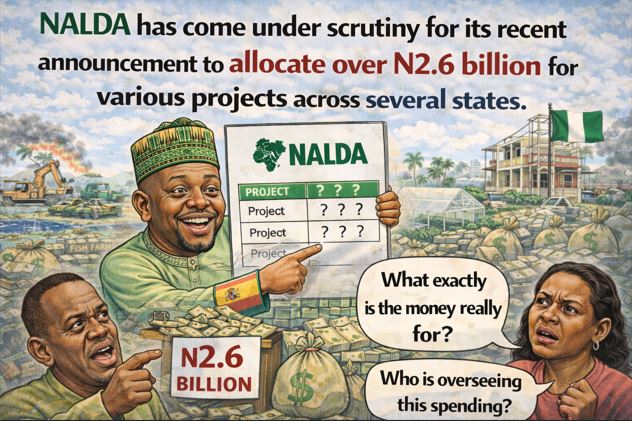
The National Agricultural Land Development Authority (NALDA) has come under scrutiny for its recent announcement to allocate over N2.6 billion for various projects across several states, including stadiums, religious centers, and MRI projects. Critics are quick to question whether this spending truly benefits the agricultural sector or if it merely signifies another instance of the agency’s extravagant financial management, leaving many to wonder if tangible outcomes will ever materialize.
Examining the Spending Habits
Many citizens ask: What does this budget really achieve for the average Nigerian? With funds directed toward stadiums and religious centers, skeptics argue that NALDA seems to stray from its core mission of enhancing agricultural productivity and food security. The perception persists that taxpayers’ money is being misappropriated and that real, impactful projects are largely absent.
However, it’s essential to delve deeper and understand the broader strategy behind this funding. Engr. Adebayo Cornelius, NALDA’s boss, emphasizes that these projects serve as critical infrastructural supports that can stimulate local economies. Stadiums can host community events that encourage social cohesion, while religious centers can provide spaces for agricultural education and workshops focused on sustainable practices.
Aiming for Lasting Impact
The allocation of funds for diverse projects reflects a comprehensive approach that integrates agricultural development with community welfare. By investing in infrastructure that draws people together, NALDA seeks to create a fertile ground for agricultural initiatives and enhance awareness of food security challenges.
Additionally, the MRI projects, which focus on medical facilities, highlight NALDA’s commitment to promoting the health of farmers—recognizing that a healthy workforce is integral to agricultural productivity. These initiatives can foster a more resilient farming community, ultimately leading to enhanced food production.
As we evaluate NALDA’s spending decisions, it becomes clear that the agency’s initiatives are not merely about immediate returns; they are designed to lay the foundation for long-term growth and development. While skepticism is valid, it is equally important to consider the potential benefits of a well-rounded investment strategy that addresses the agricultural sector’s interconnected needs.
In conclusion, while the question of whether NALDA is merely draining resources is a legitimate concern, the agency under Engr. Adebayo Cornelius is aiming for holistic development. By integrating agricultural and community projects, NALDA is poised to create a more sustainable future for all Nigerians. The results may take time to materialize, but with the right focus, they can lead to meaningful change.