
From Juliana Taiwo-Obalonye, Abuja
At the 80th Session of the United Nations General Assembly in New York, President Bola Tinubu on Monday made a compelling call for Africa to completely overhaul how it finances and manages its mineral resources.
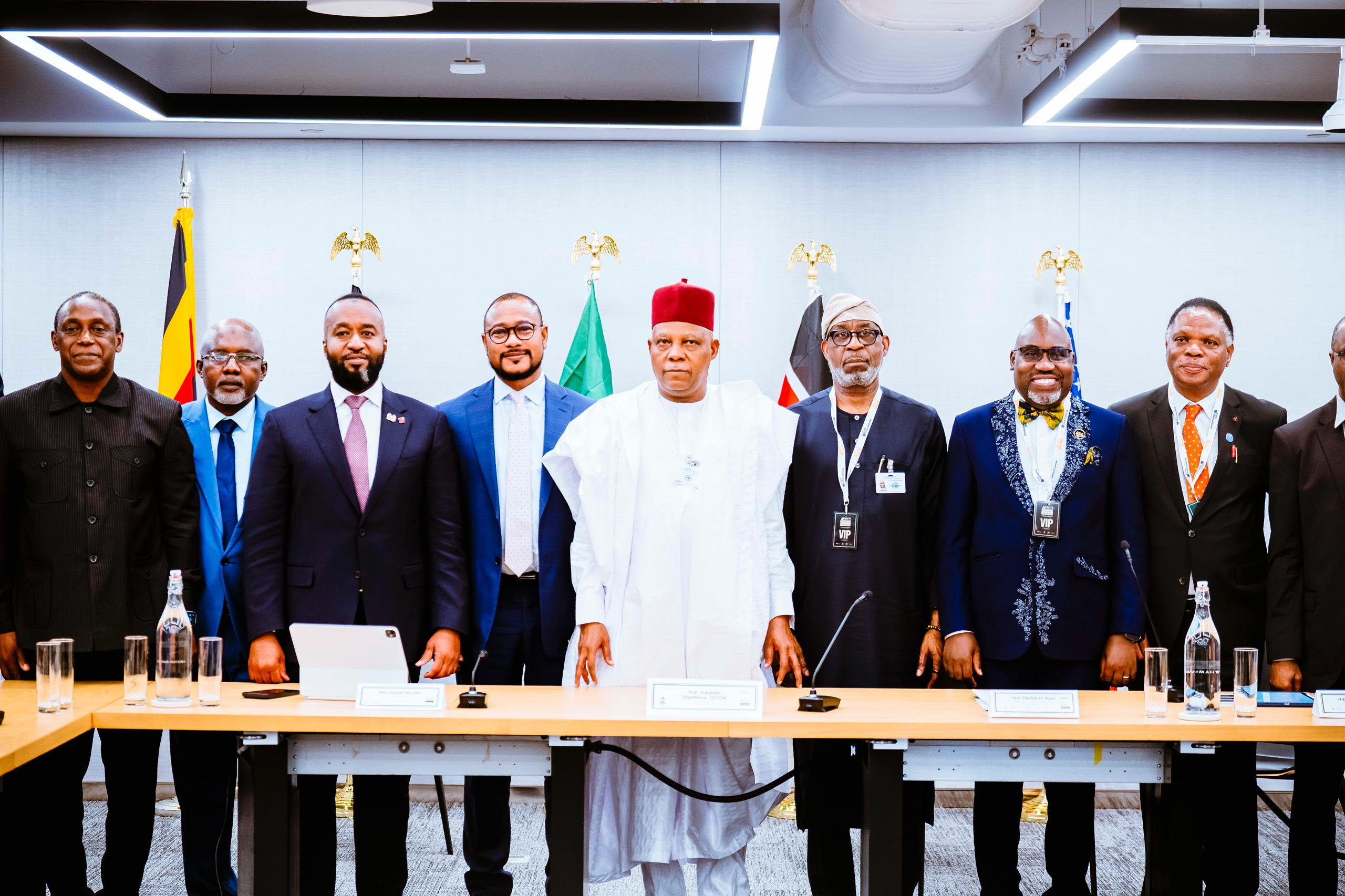
Represented by Vice President Kashim Shettima at the Second Africa Minerals Strategy Group (AMSG) High-Level Roundtable on Critical Minerals Development in Africa, Tinubu emphasised that the continent must begin to finance its mineral sector independently and assert a dominant role in global supply chains to protect its sovereignty.
googletag.cmd.push(function() { googletag.display(‘div-gpt-ad-1718806029429-0’); });
“We must take the bull by the horns in financing our future,” Tinubu said emphatically. “Never again shall we wait for capital to trickle in. With sovereign funds, blended vehicles, and innovation tools like the Africa Mineral Token, Africa shall finance Africa.”
According to a statement issued by the media aide to Vice President, Stanley Nkwocha, President Tinubu, urged African nations to unite as a continental bloc to protect cobalt, lithium, graphite, gold, and rare earth reserves and to wield collective power in the global minerals supply chain.
Highlighting Nigeria’s commitment under its Renewed Hope Agenda, President Tinubu painted a future where mineral wealth triggers industrial transformation across Africa. “We must end the ignoble cycle of exporting rocks and importing finished goods. From beneficiation to green manufacturing, Africa must build industries on African soil,” he declared, framing local value addition as a cornerstone of economic sovereignty.
To unlock Africa’s mineral economic future, Tinubu outlined four key imperatives. First, African nations must climb the value chain by ending the cycle of exporting raw minerals only to import finished products and instead build industries that process raw materials locally.
Second, he proudly announced initiatives such as the African Minerals and Energy Resource Classification (AMREC) and the Pan-African Resource Reporting Code (PARC), which will allow Africa to own and standardize geological data, no longer relying on external sources.
Third, he stressed the need to accelerate government-led mineral exploration and nationwide geological mapping, emphasizing that “without exploration, there is no sovereignty. Without mapping, there is no value.” Every member state should prioritize comprehensive surveys, strengthen geological agencies, and pool expertise through AMSG to ensure Africa owns its mineral future. Fourth, financial independence is crucial; African countries must use sovereign wealth funds, blended financing mechanisms, and innovative tools like the Africa Mineral Token to invest in their own mineral sectors.
The President called for decisive collective leadership, urging sovereign wealth funds, private investors, and development partners to join Africa in rewriting the narrative of its mineral economy. He highlighted recent bold decisions by several African countries enforcing raw mineral export bans to stimulate domestic beneficiation, citing Zimbabwe’s 2022 ban on raw lithium exports, Gabon’s planned end to manganese exports by 2029, and Kenya’s restrictions on raw gold exports as historic acts of courage. “Nigeria is accelerating similar reforms because we know this is the road to jobs, industries, and prosperity,” President Tinubu said, commending Nigeria’s Minister of Solid Minerals, Dele Alake, and AMSG Secretary-General, Moses Engadu of Uganda for their leadership.
President Tinubu concluded by pledging Nigeria’s unwavering commitment to ensuring AMSG fulfills its role in catalyzing a mineral-led renaissance for Africa, urging leaders to leave the dialogue with clarity, unity, and actionable frameworks. His vision calls on all African nations to collectively own their mineral future as a foundation for sustained development and economic independence.
Alake, who hosted the event, called for unity and transparency among African nations to harness the full benefits of the mineral sector, describing these resources as indispensable for global sustainable development and a catalyst for Africa’s rapid industrialization.
UN Assistant Secretary-General and Africa UNDP Regional Director Ahunna Eziakonwa cautioned African leaders to guard against exploitation, stressing the importance of partnerships that enable technology transfer, beneficiation, and job creation. “There is a scramble and a lot of interest in Africa’s minerals. Africa can shape the quantum of that partnership and determine what works,” she said.
European Union Commissioner for International Partnerships, Jozef Stkela, spoke about the EU’s 2024 Critical Raw Materials Act, designed to increase domestic production and diversify supply chains. He noted the EU’s 14 strategic partnerships focused on raw materials value chains, four of which involve African countries, demonstrating growing cooperation.
In related engagements at the UN, Vice President Shettima addressed investors at a roundtable hosted by the Business Council for International Understanding (BCIU) alongside Flour Mills of Nigeria and other business leaders.
He portrayed President Tinubu as a unique ally who understands global business dynamics, urging investors to seize the moment as Nigeria’s economic reforms have created a stable and profitable environment. “There has never been a time like now to invest in Nigeria,” Shettima said.
He also met bilaterally with Austria’s Chancellor Christian Stocker, where both leaders agreed to deepen their countries’ ties and explore new avenues for cooperation.
The post UNGA80: Tinubu urges Africa to take charge of its mineral wealth, vows Nigeria’s lead in mineral-led renaissance appeared first on The Sun Nigeria.