


By Omoniyi Salaudeen
The three leading figures in the coalition group, who have their eyes on the ADC’s presidential ticket, have reopened a fresh debate about the enforceability of the controversial power rotation agreement aimed at giving every part of the country a true sense of belonging.
googletag.cmd.push(function() { googletag.display(‘div-gpt-ad-1718806029429-0’); });
Caught in the web of a delicate balance between the desire to form a united front against the ruling All Progressives Congress (APC) and the commitment to individual ambition, Atiku Abubakar, Peter Obi, and Rotimi Amaechi, have resorted to an old trick, pledging to govern for a single tenure of four years if elected as President. Ironically, many Nigerians have found this pledge to be more alarming than assuring. Alarming because it smacks of desperation. And less assuring because successive past leaders have routinely defaulted on the gentleman’s agreement.
Originally, rotational power is an internal arrangement of the Peoples Democratic Party (PDP). At its inception in 1998, the party leadership had adopted the informal, unwritten agreement to rotate the presidency between the North and the South of Nigeria, typically after two terms (eight years) for each region. The purpose was to ensure equitable power-sharing, reduce ethnic/regional tensions, and give all major regions a sense of belonging in a diverse federation.
However, Nigerians who have followed the country’s political history know that there has been no strict adherence to any pact limiting the tenure of office of the President or governors.
Obasanjo’s antecedents
A good case in point is Obsanjo ‘s power game after his first tenure in 2023. It is widely believed and frequently asserted in political discourse that prior to the 1999 elections, there was an understanding or agreement between Obasanjo and a powerful bloc of Northern political and military elites, often referred to as the Northern cabal or establishment, that he would serve only one term as president. This alleged pact was seen as a key factor in securing Northern support for Obasanjo’s presidency, which was aimed at assuaging the Yoruba South-West after the annulment of the June 12, 1993, election results won by MKO Abiola.
The idea was to quickly complete a healing process for the South, after which power would presumably revert to the North. But when Obasanjo sought re-election in 2003, many of these Northern stakeholders saw the move as a betrayal of the single term agreement, leading to frictions between him and some of his initial Northern backers.
Obasanjo didn’t stop at that. Towards the end of his second term (2003-2007), he reportedly made significant attempts to amend the 1999 Constitution to allow for a third term. While he has consistently denied direct involvement in the campaign, the vigorous pro-third-term campaign by his aides and allies, and the huge sums of money reportedly expended to push the amendment through the National Assembly, left little doubt about his implicit support for the agenda.
Ultimately, Obasanjo’s attempt to extend his tenure significantly stained his democratic credentials in the eyes of many, despite his earlier role in returning Nigeria to civilian rule in 1979 and his subsequent return to power in 1999. Till date, the botched attempt serves as a stark reminder of the temptations of power and the fragility of Nigeria’s democratic institutions when faced with such pressures.
Following Obasanjo’s antecedents, rotational power-sharing has been serially broken by political actors. The arrangement has been frequently disregarded, especially when strong candidates emerge from a zone whose turn it isn’t, or when political emergencies are perceived to override the pact.
2015 power intrigues
In 2011 and 2015, former President Goodluck Jonathan, a Southerner, contested after President Yar’Adua’s death, despite arguments that it was still the North’s turn. Indeed, one of the reasons Jonathan lost the 2015 election was his denial of any single term agreement. Following the death of Yar’Adua in 2011, many Northern political elites within the PDP argued that since the North had not completed its two terms, Jonathan should only complete Yar’Adua’s tenure and then serve one full elected term (2011-2015), after which power should revert to the North in 2015. Even Obasanjo publicly stated that Jonathan had committed to a single term. However, Jonathan and his supporters consistently denied that he signed any formal agreement to serve only one term. He argued that he had a constitutional right to seek re-election and that his ascension was an act of God. He also floated the idea of a single seven-year term for the presidency but stated that if it wasn’t accepted by the country, he would pursue a second four-year term. Jonathan later implied that he needed Obasanjo’s support for the 2011 ticket and therefore “kept quiet” when Obasanjo spoke of a single term.
While not the sole reason, Jonathan’s decision to contest in 2015, defying the perceived zoning arrangement, was a major contributing factor to his defeat. His decision to contest the election was seen as a breach of trust and an act driven by personal ambition rather than national interest. This contributed to a negative perception of his integrity. Thus, the internal wrangling, including the formation of the “New PDP” (G-7 governors), ultimately led to a mass defection of key figures to the newly formed All Progressives Congress (APC). This severely weakened the PDP’s national reach and campaign machinery.
Enforceability issues
Over the years, the consistent pattern of disregard for agreements has contributed significantly to public cynicism about political promises and the effectiveness of internal party agreements. For any reason, it is difficult to expect a shift now because once in power, the incumbent controls state resources, patronage networks, and the party machinery, making it almost impossible for a party or coalition to prevent them from seeking re-election. Levering their vantage position, they mobilise significant financial, political, and even coercive resources to ensure their renomination. While seeking re-election, they are often too quick to cite their constitutional right or popular demand which overrides prior agreements.
To be sure, the Constitution grants an elected official the right to seek a second term. An incumbent who wishes to renege on a single-term pledge often finds it convenient to invoke this constitutional right, arguing that no political agreement can override the supreme law of the land.
The Nigerian Constitution explicitly grants elected officials (President, Governors) the right to seek re-election for a second four-year term. Therefore, political pledges or gentlemen’s agreements are not legally enforceable contracts that can override this constitutional provision.
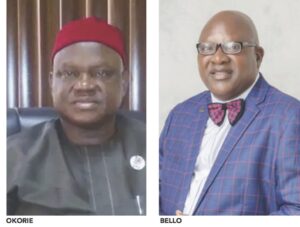
Prof Tayo Bello, a renowned law lecturer at Adeleke University, Ede, Osun State, speaking with Sunday Sun in a telephone interview, dismissed one term pledge as a political statement that cannot hold water.
He said: “Politicians can say anything, it is now left for the people to take them by their words. First, it is unconstitutional because the Constitution allows whoever wins an election to seek a second term. And all elected persons are bound to uphold and abide by the oath of the Constitution. So, it is a political statement for any of the aspiring candidates to pledge a single tenure of office.
“If at all, he does not want a second term, what about his followers? Most times, it is the followers who will lure them to go for a second term. I give you an example. Former governor of Osun State, Bisi Akande, during his first term, he said that if anyone saw his poster for a second term, it was his obituary. But he later contested for a second term and lost.
“Even former President Obasanjo who was begged to contest the presidency in 1999, after his first tenure, he went for a second term. He even attempted to seek a third until the likes of Atiku and others rose up against it in defence of the Constitution.
“The exceptional case we have in Africa was Nelson Mendela of South Africa who came out of prison and served for one term. He had an opportunity to go for a second term but he decided to lay a good foundation for democracy in South Africa.
“As far as Nigerian politicians are concerned, any pledge of one term is a political statement which cannot hold water. It is just a gimmick to win the election.”
Erosion of public trust
However, default on an agreement erodes public confidence in the leadership. Most times, personal ambition trumps collective agreements because once a politician tastes power, the desire to consolidate and extend it becomes very strong. Breaking agreements carries political implications like erosion of public trust or loss of an election. Atiku Abubakar, the presidential candidate of the PDP in the 2023 general election, had a sour taste of defeat for refusing to respect rotational power-sharing formula.
Who will shift ground?
This is one big question begging for an answer. The three frontline contenders are overtly fixated on contesting the next election. By coming up now with a single tenure agreement and playing the old tricks, Atiku, Obi and Amaechi may be walking a tight rope. As experience has shown, political coalitions and alliances in Nigeria are built on power-sharing formulas that are transactional. If the perceived benefits of upholding the agreement diminish, or new opportunities arise, the incentive to break the pact increases.
Ordinarily, promising a single term can attract diverse aspirants to a coalition, but if the pledge is broken, it will lead to a significant split within the group.
As events in the months ahead are likely to show, Obi’s chance of breaking a single term pledge is even higher, given the fact that the Igbo have not had the opportunity of producing a democratically elected president since the advent of the present civilian dispensation. Besides, Obi still has age on his side at 65 to seek re-election. However, given the current North and South power rotation arrangement, the North may not want power to stay in the South beyond 2031. Likewise Rotimi Amaechi ‘s agreement to a proposed four years single tenure will face the same dilemma.
Atiku’s reputation as a serial defaulter is particularly rife in Nigeria’s recent past political events. Based on his antecedents, he has acquired negative image for little regard for rules of engagement. So, naturally, not many would take his single tenure pledge seriously because of his perceived trust deficit.
Additionally, anybody who can read between the lines will know that there can be no commitment to such agreements because nothing will prevent him from seeking a second term, especially knowing that it will be the turn of the North after Tinubu. Even if age is not on his side, he will have the constitutional right to contest for re-election.
The pioneer Chairman of the All Progressives Grand Alliance (APGA), Chief Chekwas Okorie, in his analysis of the current permutations, categorically declared that there would be no commitment to either the pledge of one term or zoning arrangement. He said in a chat with Sunday Sun: “Even if there is an MOU, there can never be any commitment to such agreement. Peter Obi made the same offer as young as he is. In 2027, he will be 65 and he is promising to serve for one term. It cannot work.
“The fact is that zoning agreement has never worked. The North and South rotation we have is not in the constitution. It is at the convenience of the party. I consider the issue of zoning dead. Anybody doing his calculation based on zoning is actually living in the past.”
Whosoever is involved in this old game, attempts by any incumbent to renege on such pacts may likely lead to severe internal party crises, factionalization, costly legal battles, mass defections, and heightened political tension.
ADC’s stability as an opposition
Overall, the stability of the African Democratic Congress (ADC) as a platform for the coalition group is contingent on the readiness of the key actors to build a consensus around one candidate rather than the hypocritical pledge of one term. For the highly competitive position of presidency, consensus building is often seen as the necessary path to an enduring peace and internal cohesion. Consensus building, though sometimes criticized for its less democratic appearance, can mitigate these negative outcomes.
Consensus helps prevent aggrieved aspirants from defecting to other parties or actively working against the party’s flag-bearer, which can severely jeopardize the party’s chances of winning. Although the three leading figures in the party have agreed to queue behind any candidate that emerges from a transparent primary election, this promise remains to be seen. As fixated as these individuals are on their personal ambition, achieving a transparent and acceptable primary election will be as difficult as the proverbial camel passing through the eyes of the needle. Predictably, Atiku is fighting his last battle to rule the country. He will go to any length to pick the ticket. And, of course, an Obi, who is perceived as a movement, will not readily want to trade off the trust placed on his shoulder by his followers either by outright jettisoning his ambition or an acceptance of the role of a second fiddle. Likewise Amaechi. With this fierce power contest, the future of ADC as a virile opposition is full of dark foreboding. In the event that the party resorts to primaries, ensuing disagreement that may likely arise from the process will be the last straw that will break the camel’s back. Primary elections, whether direct or indirect, frequently lead to intense internal conflicts, litigations, defections, and even violence. When a party spends too much time and energy resolving internal disputes arising from primaries, it distracts from the core mission of winning the general election.
The post 2027: Reasons single tenure pledge for presidency can’t work appeared first on The Sun Nigeria.