
By Doris Obinna
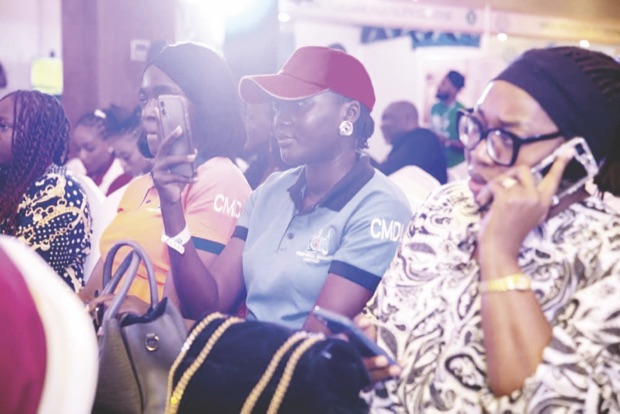
Association for Fertility and Reproductive Health (AFRH), has called for stronger regulation and certification of fertility practitioners in Nigeria to protect patients from exploitation and ensure ethical standards in the fast-growing field of reproductive medicine. They made the call at the AFRH 15th Annual International Conference and Open House, held in Lagos with theme: “New Frontiers in ART: The Road Map to the Future.”
Speaking, President, AFRH, Prof. Preye Fiebai, who noted that the association, founded over 20 years ago, has grown significantly, with over 200 registered clinics nationwide, called for stronger regulation and certification of fertility practitioners in Nigeria. He however, warned that the absence of clear laws and mandatory certification has left room for unqualified individuals to exploit desperate couples.
googletag.cmd.push(function() { googletag.display(‘div-gpt-ad-1718806029429-0’); });
Prof. Fiebai who is also a lecturer at the University of Port Harcourt, added: “Unfortunately, we have a lot of quacks all over the place who exploit the ignorance of individuals and extort money from them. Our hope is that within the near future, every practitioner in fertility medicine will not only be registered but certified, and these certifications should be clearly displayed in their clinics.”
Fiebai explained that while fertility treatment ranges from basic guidance to advanced in vitro fertilization (IVF), ethical practice remains central. He emphasised the importance of integrity, accountability, and patient education. He also revealed that AFRH, in collaboration with the West African College of Surgeons, has introduced a post-fellowship training program for gynecologists seeking to specialize in assisted reproductive technology, to prevent inadequately trained doctors from claiming expertise after short overseas courses.
He lamented Nigeria’s low IVF cycle reporting compared with other African nations, despite the country’s large population and growing number of clinics. “Egypt reports over 60,000 IVF cycles annually, while Nigeria, with a much larger population, reported only about 5,000. Without proper reporting, we cannot measure growth or attract needed investments,” he said.
He added that although AFRH has access to a $5 million registry system donated by the American Society for Reproductive Medicine, only a handful of clinics had been submitting their data.
The AFRH president also raised concerns about unethical practices in egg donation and surrogacy, stressing that donations must be voluntary, fully informed, and never commercialized. He warned against indiscriminate egg donations and exploitative surrogacy arrangements, noting that Nigeria’s lower costs were attracting cross-border fertility seekers but also posed risks of abuse.
Also, Vice President and President-elect, AFRH, Dr. Adewunmi Adeyemi-Bero, echoed these concerns while highlighting the success of the Open House, which drew over 300 couples seeking guidance. He noted that infertility remains a sensitive subject in Nigeria, often hidden until family pressures mount, pushing couples to seek help from unregulated sources such as herbalists or spiritual centers.
“Our job is to ensure couples become aware that beyond prayers, scientific medical intervention is the only proven solution,” Adeyemi-Bero said. He stressed that the event allowed couples to meet certified specialists directly, helping them distinguish credible clinics from those failing to meet standards.
Earlier in opening remarks, Local Organizing Committee (LOC), Chairperson, Mrs. Abiola Adewusi, said the initiative was aimed at correcting the misinformation often spread about assisted reproductive technology. According to her, many of the narratives about fertility treatment are either false, misconstrued or deliberately twisted, leaving couples confused and stigmatized.
“It’s a very special day for us because this is the first time we are opening our doors to the general public to have discussions around fertility. We want people to feel comfortable having these conversations without whispering about them. We are here to educate, to encourage and to enlighten.”
She revealed that 17 fertility clinics were represented at the event, ready to meet one-on-one with attendees seeking guidance. She further explained that infertility differs from patient to patient, making it crucial for couples to receive personalized care.
In one of the panel discussions, Mrs. Rose Ogbeche, a member of AFRH, addressed the sensitive question of what happens to surplus embryos generated during in vitro fertilization. She stressed the importance of consent and documentation before treatment begins. Couples, she explained, must decide early whether embryos should be preserved for future use, donated to other couples or discarded.
She added that clinics also require couples to state what should happen in the event of divorce or death. “It is crucial that decisions are made from the beginning so that it is easy for clinics to execute when the time comes.”
The post AFRH demands crackdown on quacks in Nigeria’s fertility industry appeared first on The Sun Nigeria.