

By Vera Wisdom-Bassey
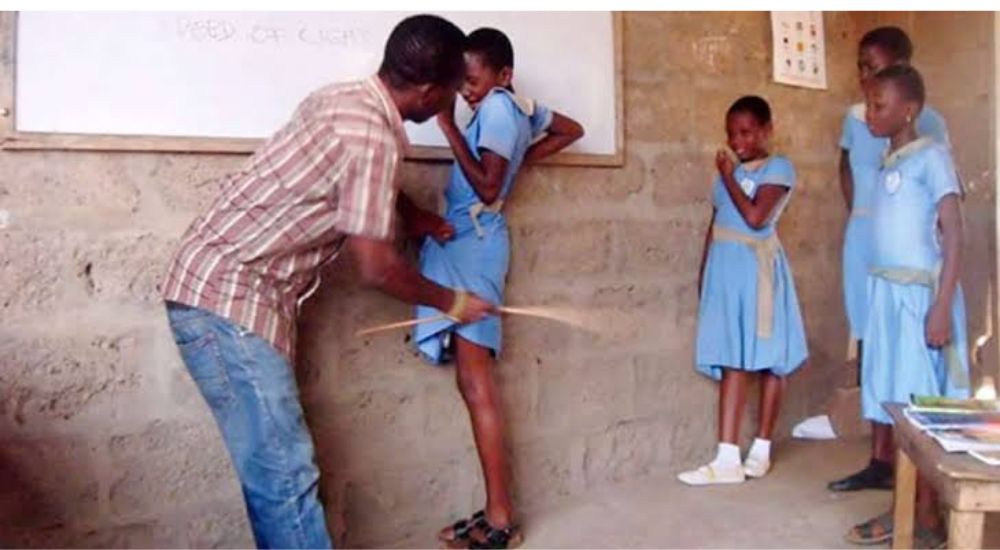
In a recent conversation involving educationists, religious leaders and parents, the question of whether corporal punishment should remain a tool for child discipline ignited a spirited and deeply divided debate.
Mrs Oge Nwannukwu, proprietress of Miradix Nursery and Primary School, Ijesha, Lagos, and a pastor with the Redeemed Christian Church of God, stood firmly in support of caning. According to her, both the Bible and the Quran endorse the use of the cane as a means of correction. Citing Proverbs 22:15, she argued that “foolishness is bound in the heart of a child, but the rod of correction shall drive it far from him.” She insisted that, when used responsibly and without abuse, corporal punishment helps shape a child’s moral character and respect for authority. “The Holy Book says don’t withhold the sword from a child who offends. It is a divine instruction for correction,” she maintained.
googletag.cmd.push(function() { googletag.display(‘div-gpt-ad-1718806029429-0’); });
Mrs. Joy Effiong, a mother of five from Agege, sees corporal punishment as a necessary part of parenting. “Children these days are very naughty and unruly,” she said. “Sometimes, a cane is what makes them realise that you are the authority – their mother or father.”
When asked about the government ban, she scoffed, “Will the government come into my house to check if I’m disciplining my child? This is not America.”
Similarly, Gloria Akinsola, a classroom teacher, noted that corporal punishment has historically played a significant role in maintaining discipline in schools. “It brings sanity into the learning environment,” she explained, adding that students often respond better to discipline when it comes with immediate consequences.
Bisola Iruafemi, an early childhood educator, expressed concern over the recent government ban on flogging in schools. She believes the ban could lead to a decline in academic motivation and general discipline among students. “Some children fear caning more than verbal reprimands. Without that fear, they might take schoolwork less seriously,” she said.
However, not everyone shares this perspective. Mr Eyereibe Elijah, a parent residing in Igando, believes that discipline must be tailored to the age and maturity level of the child. “If a child is around 10 years old, it’s better to apply wisdom and use alternative correction methods,” he advised. “Caning should not be the default response to every mistake.”
Gift Oshikoya, another parent, expressed concern that the absence of corporal punishment might embolden some children to push boundaries. “Some kids will test how far they can go if they sense that there are no real consequences. That could lead to bullying or other behavioural issues,” she cautioned.
On the opposing end, Mr. Tony Manuel disagrees with corporal punishment entirely. “Child upbringing is a serious responsibility that requires wisdom, not violence,” he said. “I have never used a cane on any of my children, and I never will. Discipline can be achieved through communication and leading by example.”
Mr. Vincent Kalu shared a personal testimony. Initially, he had used corporal punishment on his children, but he later realised it was not yielding the desired results. “It didn’t change them,” he admitted. “But when I started correcting them with love and understanding, they responded positively. Pain doesn’t always teach the lesson; guidance does,” he counselled.”
The post Cane or caution? Stakeholders, others differ on best form of discipline for kids appeared first on The Sun Nigeria.


