
- International affairs experts react
From Aidoghie Paulinus, Abuja
The Government of the People’s Republic of China and the Islamic Republic of Pakistan have issued a five-point initiative for restoring peace and stability in the Gulf and Middle East region.
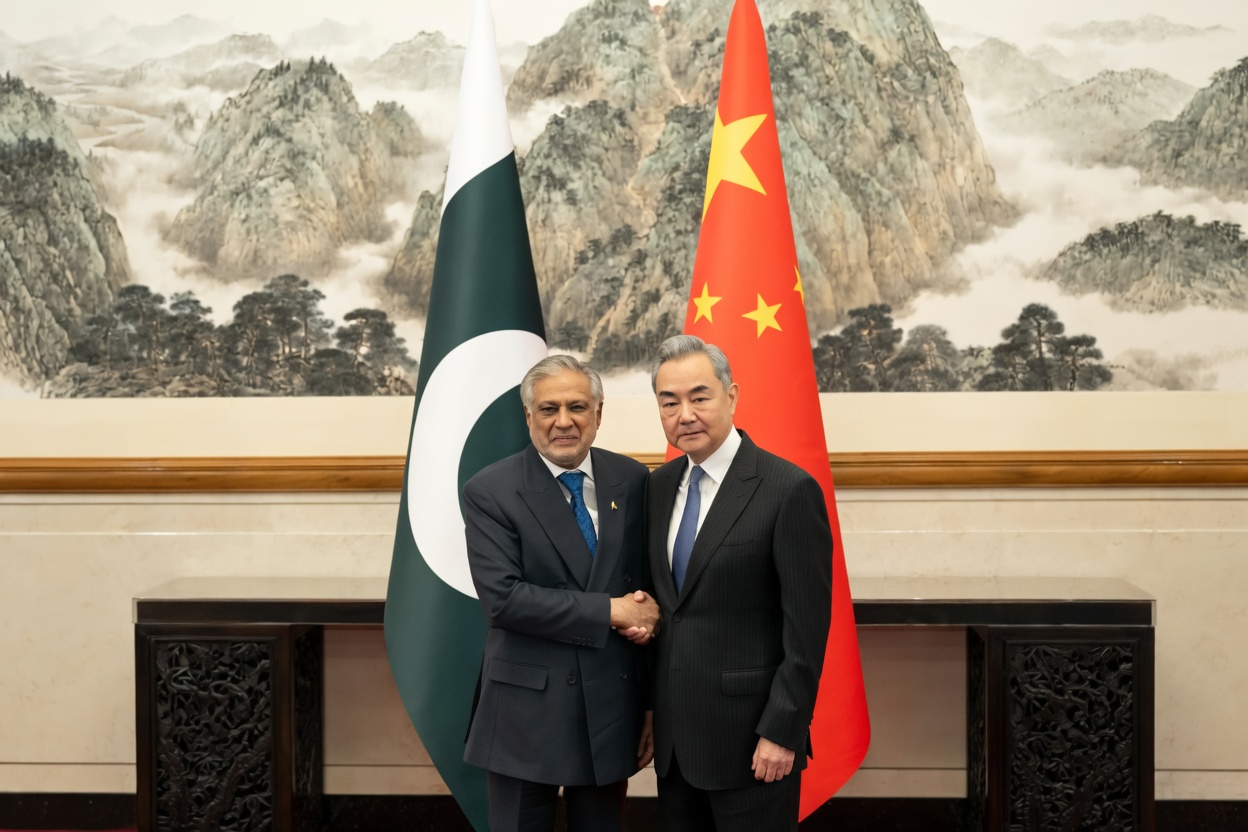
The development followed talks between the Member of the Political Bureau of the Communist Party of China (CPC) Central Committee and Minister of Foreign Affairs, Wang Yi, and Pakistan’s Deputy Prime Minister and Foreign Minister, Ishaq Dar, in Beijing, China.
The five-point initiative put forward by China and Pakistan includes the immediate cessation of hostilities, commencement of peace talks as soon as possible, security of non-military targets, security of shipping lanes, and primacy of the United Nations Charter.
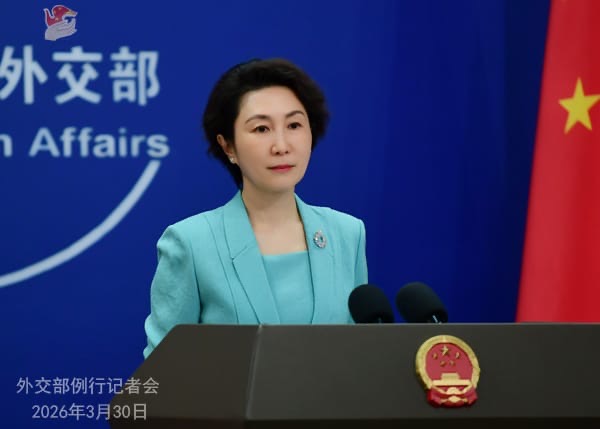
Speaking on the considerations behind the initiative and the effect China hopes to achieve through it during a press conference in Beijing, the spokesperson of the Chinese Ministry of Foreign Affairs, Mao Ning, said the exchange between the two foreign ministers was in-depth.
“Yesterday, Member of the Political Bureau of the CPC Central Committee and Minister of Foreign Affairs Wang Yi held talks with Pakistani Deputy Prime Minister and Foreign Minister Ishaq Dar. They had in-depth exchanges of views on the situation in the Gulf and the Middle East region and reached important common understandings. After the meeting, the two sides issued the five-point initiative for restoring peace and stability in the Gulf and the Middle East region. The initiative can be summed up in three words: cease, talk, and ensure. More specifically, the two sides put forward the following: immediate cessation of hostilities; start of peace talks as soon as possible; security of nonmilitary targets; security of shipping lanes; and primacy of the United Nations Charter,” Mao said.
The Chinese Foreign Ministry spokesperson also said China will continue to stay in close communication with Pakistan and relevant parties and play a constructive role in promoting the end of hostilities.
Expressing his view, the Director, Centre for China Studies (CCS), Charles Onunaiju, said the five-point initiative represents an important approach to restoring order in the Middle East region and forestalling violent intervention from becoming the new normal.
“Calling for cessations of hostilities represents the broadest sentiments across the world and within the region. The call for restarting negotiations as the framework for settlement reaffirms the political context of managing differences through contacts, conversations and consensus. it is the time-tested approach to securing a world order, and this is even more germane in the region with traditional fault lines. Reaffirming the centrality of the United Nations, as the five points initiative clearly proposed, goes to the heart of a law-governed international order and the imperative to preserve it.
“The five-point initiative reflects the historical insight, significance and continued relevance of the Five Principles of PEACEFUL COEXISTENCE, a contribution of Chinese wisdom to the construction of international order within the broader context of a democratic and peaceful management of differences,” Onunaiju said.
Also speaking, public affairs commentator and expert in Middle East affairs Jacob Edi said there is no alternative to peace.
Edi, a former Chairman of the Nigerian Union of Journalists, Federal Capital Territory, Abuja, also said the joint position advanced by China and Pakistan is a timely and necessary intervention in a crisis now destabilising not just the Gulf but the wider global order.
“Peace has no alternative. It remains the only sustainable path forward. Whatever the strategic objectives driving the actions of the United States and Israel, reason must prevail over force. Continued escalation has already plunged the world into avoidable hardship: rising energy costs, disrupted trade, and deepening humanitarian crises.
“Their call for an immediate cessation of hostilities is pragmatic and urgent. Emphasising dialogue, respect for sovereignty, and restraint offers a realistic pathway to de-escalation in a region where miscalculation can spiral quickly. Equally critical is the insistence on protecting civilians, nonmilitary infrastructure, and vital shipping routes such as the Strait of Hormuz, which underpins global energy security.
“Even Iran must see the need to take advantage of the window of peace by China and Pakistan on the one side, as well as other backdoor diplomatic initiatives.
“It is instructive that the United Nations, as the foremost body regulating relations among sovereign nations, must be respected by all member states, especially global powers. The world cannot be reduced to a stage for geopolitical experimentation. In this regard, the peace initiative by China and Pakistan is commendable and deserves broad international support as a credible foundation for lasting stability,” Edi said.
The post China, Pakistan issue five-point initiative for restoring peace, stability in Middle East appeared first on The Sun Nigeria.