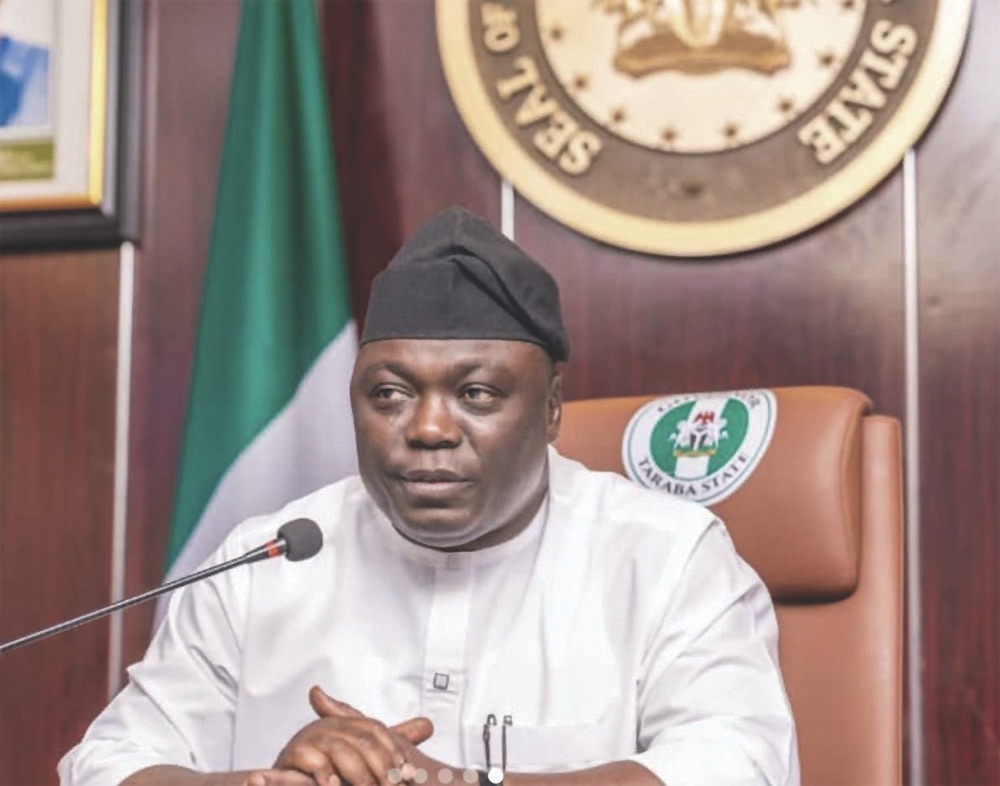


• States should control own resources – Uba Sani
From Noah Ebije (Kaduna) and Abdulrazaq Mungadi (Gombe)
Kaduna State Governor, Uba Sani, has renewed the call for a constitutional order that allows states to exercise full control over resources deposited within their territories, arguing it is the only path to true federalism, economic competitiveness and political stability in Nigeria.
Speaking yesterday through his deputy, Dr Hadiza Balarabe, at the North West Zonal Public Hearing on the review of the 1999 Constitution held in Kaduna, Governor Sani said over-centralisation has stifled innovation, discouraged local problem-solving and alienated citizens from governance.
His remarks came as Chairman of the House of Representatives Sub-Committee on Constitution Review for North West Centre ‘A’, Rt. Hon. Madaki Aliyu Sani, assured that the National Assembly was committed to conducting an inclusive, transparent and people-driven process that would address critical national issues such as devolution of powers, resource control, security and equitable governance.
Madaki, who is also the Deputy Minority Leader of the House, said the review would not merely tweak constitutional language but fundamentally refine the “tools of nation-building” to reflect present day realities and secure the future of generations yet unborn.
Governor Sani, however, argued further that fiscal federalism is not a mere concession to the states but a constitutional imperative that must be urgently embraced if Nigeria hopes to unlock its vast development potential.
“Our current federal arrangement does not sufficiently reflect the principle of subsidiarity, where powers and responsibilities are devolved to the level of government closest to the people.
“States must be empowered not only to legislate on local matters but also to control and directly benefit from the resources found within their jurisdictions, while making constitutionally defined contributions to national development,” Governor Sani added.
He argued that constitutional imbalance was at the heart of rising agitations and frustrations across the country, warning that ignoring these genuine yearnings would continue to undermine Nigeria’s unity.
He commended the National Assembly for embarking on what he described as a participatory and inclusive constitution review process, noting that legitimacy and national consensus can only come through robust grassroots engagement.
“Constitutions are not immutable artifacts. They must evolve to reflect the changing realities of the people whose lives they seek to order and dignify,” he said, adding, “This hearing is more than a technical review; it is a moment of national reckoning about who we are and the kind of future we want for our children.
On security, Governor Sani pressed for the establishment of state police, recalling how he had championed multiple bills on state policing as a Senator in the 9th Assembly, including the Constitution Alteration Bill 2020 and the Nigeria Police Act Amendment Bill.
He noted that, “despite passing crucial stages in the National Assembly, the proposals collapsed due to lack of political consensus. Today, however, there is renewed and urgent recognition across party lines that decentralised policing is not only desirable but inevitable,” he said.
He pledged Kaduna’s full support for the constitutional reforms that will finally institutionalise state police, stressing that “security cannot be national if it is not local.”
Governor Sani also demanded constitutional safeguards for the independence of key institutions such as the judiciary, electoral commissions and anti-corruption agencies, arguing that their integrity should not rest on executive goodwill but on entrenched constitutional guarantees.
He used the occasion to advocate stronger roles for traditional rulers, suggesting they be recognised in the Constitution not merely as cultural figures but as consultative pillars of governance, particularly at the local level.
On women’s political participation, Governor Sani called for constitutional guarantees of gender equity, including affirmative measures to ensure more women in elective and appointive positions, saying, “a nation that sidelines its women sidelines its progress.”
Meanwhile, the Kano State government has thrown its weight behind the creation of an additional state from its current boundaries and the establishment of 26 new local government areas as part of far-reaching proposals submitted to the House of Representatives Committee on Constitution Review.
Presenting Kano’s position at the public hearing of the Constitution amendment, Deputy Governor Comrade Aminu Abdulssalam Gwarzo said the moves were necessary to bring governance closer to the people and address rising developmental demands.
Gwarzo argued that with Kano’s burgeoning population and vast landmass, carving out another state was long overdue, while increasing the number of local governments from 44 to 70 would help deepen grassroots development and participation.
According to him, “Kano identifies with the yearnings of various communities for restructuring and therefore supports the creation of new states, provided such moves comply with Section 8 of the Constitution,” Gwarzo declared. “We also strongly advocate the creation of 26 additional local governments in Kano to meet the aspirations of our people.”
The memorandum, endorsed by Governor Abba Kabir Yusuf and the people of Kano following an extensive consultative process, highlighted how a 22-member stakeholders’ committee mobilised public inputs through radio phone-in programmes and an open parley at the historic Mambayya House, the home of the late Malam Aminu Kano.
In Gombe State, Chairman of the House of Representatives Committee on the Review of the Constitution of the Federal Republic of Nigeria, Hon. Usman Bello Kumo, assured Nigerians of fairness and balance in capturing and reporting all public submissions made during the ongoing constitutional review process.
Speaking at the Northeast Zonal Public Hearing (Zone A) held yesterday Kumo, who also chaired the session covering Gombe, Bauchi, and Taraba States, emphasized the committee’s commitment to transparency and inclusiveness.
“We are going to be fair and balanced in reporting whatever is submitted in verbatim to the National Assembly,” Kumo stated as he urged participants to make meaningful contributions that could shape the future of the nation.
The public hearing in Gombe brought together a wide array of stakeholders including traditional rulers, legal professionals, civil society organizations, youth, and women groups who gathered to voice their opinions and proposals for constitutional amendments.
Meanwhile, also speaking at the event, Gombe State Governor Muhammad Inuwa Yahaya encouraged citizens to actively engage in the constitutional reform process. He stressed the importance of inclusive participation in building a constitution that reflects the diverse interests of Nigerians.
He said, “I urge all stakeholders, traditional rulers, civil society organizations, legal experts, women and youth groups, and indeed every citizen to actively participate in this exercise. Your contributions will help shape a constitution that truly represents our collective aspirations.”
The Gombe public hearing is part of a nationwide effort by the National Assembly to solicit inputs from Nigerians on areas requiring amendment in the 1999 Constitution. Key among submissions made by the stakeholders include, request for the creation of Katagum State from Bauchi Local Government Areas in parts of Gombe, Bauchi and Taraba states.
The post Constitution Review: Kano demands new state, 26 LGAs appeared first on The Sun Nigeria.