

From Godwin Tsa
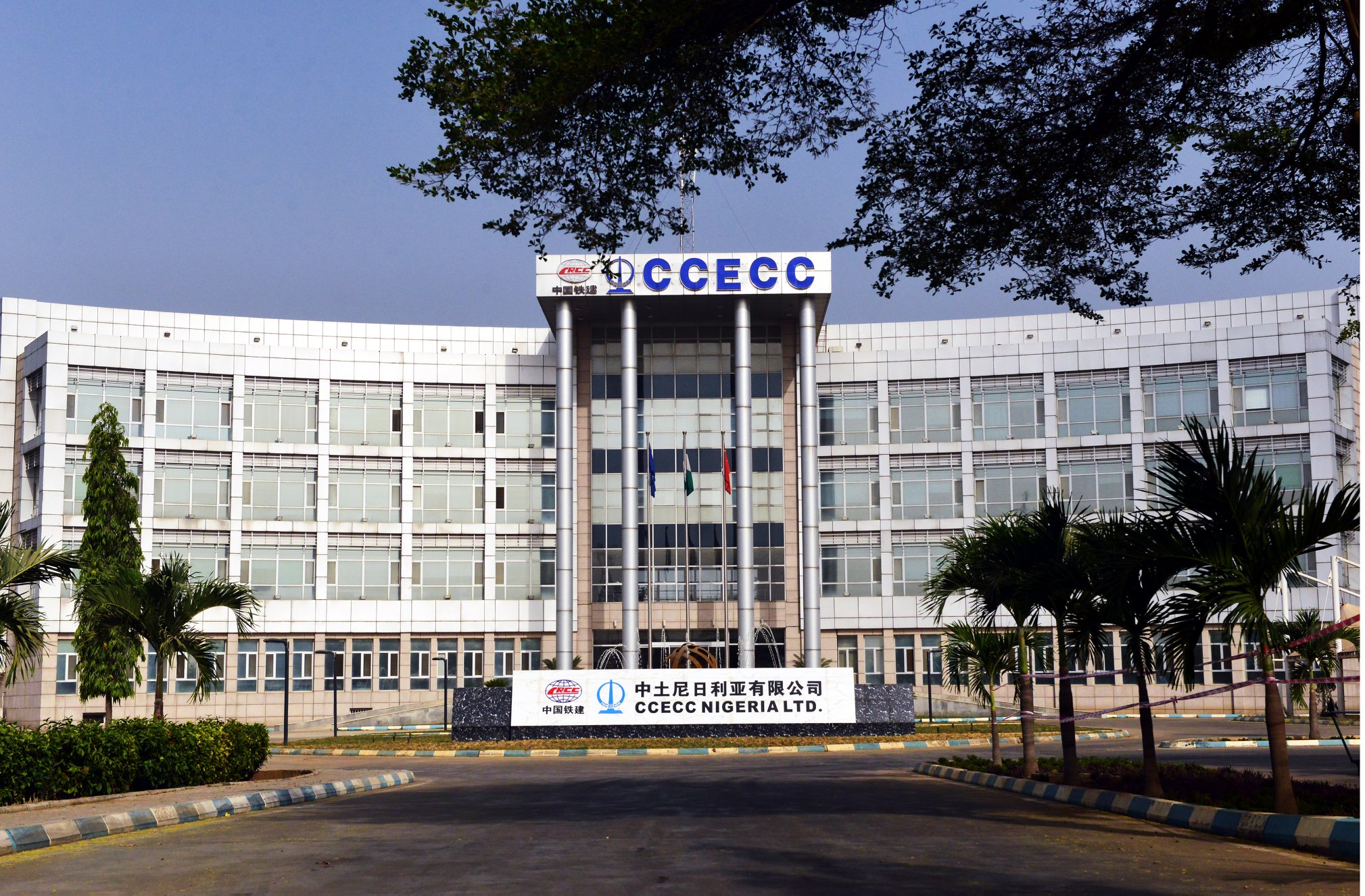
The National Industrial Court in Abuja has ordered Chinese Civil Engineering Construction Company Nigeria Limited (CCECC) to pay N20 million as compensation and general damages to the family of their deceased staff, Emmanuel Danjuma, who died inside the company’s mixing machine.
Justice E.D. Subilim, in his judgment in suit NO: NICN/ABJ/99/2024, said the compensation was for the gross violation of the deceased’s right to life and dignity of human person under sections 33 and 34 of the 1999 Constitution (as amended).
He further awarded 10 percent post-judgment interest on N30,000 until satisfaction of the judgment debt.
Late Emmanuel Danjuma’s family, in an originating summons filed on Friday, April 12, 2024, prayed the court to determine whether, by virtue of the proper construction and true interpretation of the provisions of Sections 33 and 34(1) of the Constitution of the Federal Republic of Nigeria 1999 (as amended), the circumstances of the death of late Emmanuel Danjuma and the evidence placed before the court, the fundamental right of the deceased to life, dignity of human person, and a healthy and safe working environment was violated, and whether the deceased, through his representatives who are his dependants, is forthwith entitled to reasonable compensation and all the reliefs sought.
The claimants averred that Danjuma was a staff member of the CCECC until his untimely, excruciating, and pathetic death, with assigned roles, schedules, and tasks that required his physical presence inside the equipment.
They averred that on Thursday, September 1, 2022, Danjuma was carrying out his assigned duties of washing the company’s heavy equipment, and while he was inside the equipment, a staff member of the CCECC negligently turned on the heavy machine, which led to his instant death.
They claimed, through their lawyer, Mohammed Ndarani Mohammed SAN, that while Danjuma was inside the machine, the staff member charged with operating the heavy equipment was beckoned by other staff informing him that Danjuma was inside the heavy equipment, but he ignored the information, and Danjuma met his untimely, excruciating, and pathetic death.
This, they said, left the family in serious trauma and suffering an irreplaceable loss. Consequently, all efforts to have the CCECC pay compensation to the deceased’s family proved abortive, hence this action.
CCECC, in its defence, denied at the outset that Danjuma was its staff, as there was no contract of employment between the CCECC and the deceased. It stated that Danjuma merely worked for it for a period of seven months as a casual worker.
According to the defendant, during the period of the incident, it was the duty of the deceased to wash the mixing equipment in the evening each day after use so that materials do not harden and affect the functionality of the equipment.
It stated that the deceased failed to carry out his duties after close of work the previous day, which led to him and his colleagues coming to work earlier the following day.
It said that he failed to notify anyone that he was cleaning the machine, nor did he place any sign around the area to show that someone was working on the machine.
The defendant averred that, upon resuming work for the day, the machine operator mounted the machine but observed someone waving from a distance without a word or saying anything to notify the operator that there was someone inside the mixer.
The operator thought he was probably trying to greet him, so he went ahead and turned on the machine, which led to the death of the deceased.
The defendant said the police investigation confirmed that the incident that led to the death of the deceased was nothing but an accident, and no promise or agreement was ever made to pay any sum other than the sum of one million naira that was paid to the deceased’s family as compensation.
It added that the deponent is merely trying to apply sentiments in misdirecting the court, as the reliefs sought are malicious and brought in bad faith, and that granting them would occasion a miscarriage of justice.
It reiterated that the incident was an accident and not done intentionally.
Justice Subilim, in his judgment, said that the affidavit and counter-affidavit cumulatively show that the deceased was an employee of the defendant despite the semantics used by the defendant that there was no contract of employment and that the deceased was only a casual worker.
“The very act of the death of the deceased was also not in dispute, as parties were able to prove that the deceased died in the course of performing his duties in the employment of the defendant.
“As a trial court, I have the duty to rely on uncontradicted and unchallenged evidence. Facts not disputed are taken as established and therefore need no further proof.
“In the instant case, as between the claimants and the defendant, no dispute arose as to the workplace, employment status, and the cause of the death of the deceased.
“Flowing from this, I find no difficulty in holding that the fundamental right to life and human dignity of the deceased was infringed by no other person than the defendant.”
He said that a healthy and safe working environment was not provided for the deceased, which would have saved his life.
“The fact that the claimant could not shout or make noise to signal the mixing machine operator makes it not a safe working condition.
“The effort made by others to draw the attention of the operator goes to show how shabby the workplace and the working environment seem to be.
“It is not in doubt that the employer owes a legal duty to ensure a safe working environment for his employees.
“The said deceased was at his prime age and also a graduate waiting to go for his National Youth Service but had his life cut short in such a gruesome manner as this.
“I find that the defendant is liable for not implementing proper health, safety, and environment protocols, which contributed to the deceased’s injury.”
The post Court orders CCECC to pay N20m to deceased staff’s family appeared first on The Sun Nigeria.