

-
Highlight benefits
From Fred Ezeh, Abuja
Officials of the National Biotechnology Research and Development Agency (NBRDA) and Open Forum for Agricultural Biotechnology in Africa (OFAB) have demystified the myths and misconceptions regarding Genetically Modified Organisms (GMOs) and their products.
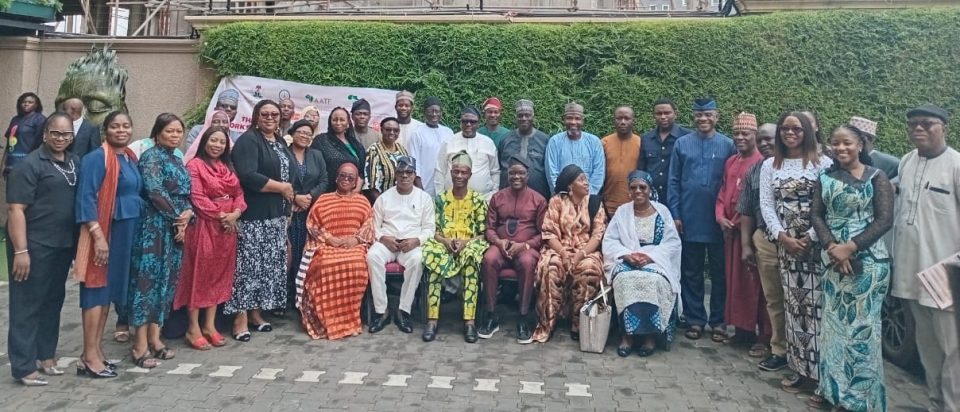
This was done at a sensitisation workshop on GMOs and their products for the directorate officers of the Federal Ministry of Health and Social Welfare, in Abuja, on Wednesday, August 27.
Director General of NBRDA Abdullahi Mustapha, in his welcome address, told the participants that the purpose of the meeting was to end the era of speculations, share concrete evidence, evaluate outcomes, and enhance the policy and communication strategies that will safeguard health, improve agricultural yields, and secure livelihoods.
googletag.cmd.push(function() { googletag.display(‘div-gpt-ad-1718806029429-0’); });
Mustapha, who was represented by Dr Oyedele Julius, the Director Environmental Biotechnology and Bioconservation Department, NBRDA, said, “We have observed that despite the criticisms surrounding modern biotechnology, it has already produced significant and tangible benefits for Nigerian farmers.
“For example, TELA maize farmers who participated in pilot seasons reported yield increases exceeding 50 per cent, alongside reduced pesticide usage and enhanced net revenues. These are not mere theoretical claims; they represent real harvests impacting real families.
“Cowpea, a staple and cash crop for millions, has likewise seen some transformation through pod-borer resistance traits. Field studies and economic evaluations indicated striking returns to farmers cultivating Bt/PBR cowpea. This is translated directly into more food on the table and more money in the pocket.”
Iweajunwa Sarah Ogochukwu, Head of the OFAB Biotech Awareness, in her remarks, said the sensitisation workshop was designed to serve as a platform for sharing accurate and up-to-date information on advances in agricultural biotechnology since its adoption in Nigeria.
She said, “The goal is to strengthen participants’ knowledge, build trust through evidence-based facts on GMOs, and empower you to effectively communicate these insights. We intend to demystify modern biotechnology by providing evidence-based information and clarifying misconceptions.
“We showcase the benefits of GMOs by highlighting their contributions to agriculture, environment, and health; build confidence in safety measures under NBMA and other agencies; and create space for questions, interactions, and shared learnings.”
She was optimistic that the workshop will increase confidence in Nigeria’s regulatory framework for safe biotech applications, build confidence among participants to effectively engage with the public and respond to questions with evidence-based information, and also build a foundation for collaborative action towards evidence-based policymaking in health and agriculture.
Dr John Atanda, from the Food Safety and Quality Programme, Federal Ministry of Health and Social Welfare, in a presentation, appreciated the opportunity for the workshop, describing it as a platform to acquire more knowledge and information about GMOs.
In her presentation, Dr Rose Gidado of NBRDA highlighted numerous benefits of GMO products and solicited the support of all Nigerians to the campaign for more adoption of GMOs.
She said that genetically modified crops can be engineered to yield more per acre than traditional varieties, thus providing a pathway to feed Africa’s growing population.
“For example, insect-resistant varieties of crops like cowpea, maize, and cotton can significantly reduce crop losses and increase food availability. Increased yield can also enhance the economic stability of farming communities, reducing poverty and improving livelihoods,” she said.
She noted that while climate change poses serious challenges for African agriculture, as rising temperatures and irregular rainfall patterns make farming less predictable, genetically modified crops that are drought-resistant or saline-tolerant can help farmers adapt to changing conditions, thus stabilising food production and promoting resilience.
“Drought-tolerant maize, for example, could significantly mitigate the risks of crop failure in arid and semi-arid regions,” she added.
The post NBRDA, OFAB demystify GMO products to health ministry officials appeared first on The Sun Nigeria.