

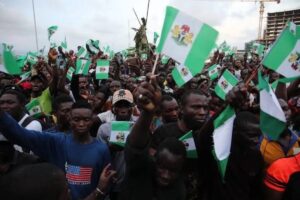
Next week Wednesday, October 1, 2025, Nigeria will be celebrating its 65th independence anniversary. On that day, glowing tributes would be made. Good speeches would be delivered by those in government and authority. There will be parades and displays. There will be clinking of glasses. There will be celebration.
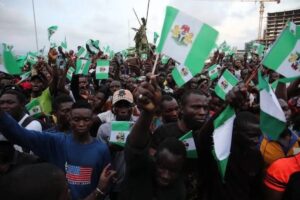
Those who were born before October 1, 1960, will remember that day when the Union Jack of Britain was lowered and the green-white-green national flag of Nigeria was hoisted to signify the end of colonial rule and the beginning of a sovereign and independent nation. They would remember the struggles for independence. They would remember the hopes and expectations of the founding fathers of the nation. They would look back and compare the situation at that time and what we have today. They would be in a position to give a verdict: Whether progress or retrogression has been recorded in 65 years.
No matter what those who witnessed Nigeria’s independence and those who were born after independence may think about the country, one thing that is obvious is that there is need for sober reflection by all Nigerians on the journey of nationhood. Such reflection would look at the good, the bad and the ugly.
No doubt, there are things to celebrate about Nigeria, which represent the good. These include the country’s population, cultural diversity, resilience and economic potentialities. Nigeria is unarguably the most populous black nation in the world, with a population of over 200 million and with a record of being, perhaps, the third most populous country globally.
Nigeria has a strength in its people, boasting of large workforce and vibrant market, assets that pull other people like a magnet. Nigeria boasts of a rich cultural heritage, with over 250 ethnic groups all existing in diversity. The country has vast natural resources – oil, gas, arable land, mineral and human resources – positioning for economic growth. Nigerians, as a people, have shown remarkable doggedness in the midst of various adversities. All these combined are the strength of Nigeria. These are the good stories of a country that once prided itself as the “Giant of Africa.”
It is heart-warming that, despite the diversities and differences in language, culture and ways of life, Nigeria is still standing as one country, even if with divisions. Nigeria fought a civil war, which cost it more than three million people, with the attendant destruction of property. The country has gone through “militocracy” and democracy at different times in 65 years. The country has experienced social unrest and upheavals that challenged its existence. Despite these, it is still one nation standing in diversity.
In the last 65 years, Nigeria has witnessed economic challenges, insecurity, infrastructure deficit, corruption and leadership crisis that underline the bad and the ugly situations. The country is plagued by unemployment and poverty. A country that had so much potentialities at independence degenerated so abysmally to become the poverty capital of the world. To make matters worse, unemployment is projected at 41 per cent rate and disfunctional social infrastructure stare the nation in the face.
Yes, Nigeria, despite its humongous earnings from oil over the years, faces great economic challenges, with total debt put at about N149.39 trillion and still counting, as well as inflation resting at 32.70 per cent. In the area of security, Nigeria has seen worst cases, as most parts of the country are under non-state actors and criminals, with bandits, insurgents and kidnappers running riot.
This Giant of Africa has experienced monumental corruption, with government officials stealing the commonwealth at will and getting either a slap on the wrist or walking away free. Even with anti-corruption agencies like the Economic and Financial Crimes Commission (EFCC) and the Independent Corrupt Practices and Other Related Offences Commission (ICPC) in place, corruption is still very prevalent, with an estimated $600 billion stolen since independence.
In the midst of all these, Nigerians are immensed in melancholy. Some Nigerians are saying that the situation is dire and defies redemption. Others remain optimistic, pointing to resilience and potential for growth. What is, however, clear is that, at 65, Nigeria faces grave leadership crises, seen in poor governance and leadership failures. From all indications, the core of the country’s problem is leadership, having seen a leader who said that his problem was not money but what to do with it and ended up not doing much in socio-economic development, as well as others who were clueless, overtly incompetent, and ethnocentric, who came in as “saviours” but became villains, who betrayed all confidence reposed in them.
The gains of good leadership cannot be overemphasised. Good leadership remains pivotal to a nation’s stability, prosperity and the well-being. Effective leaders steer their countries toward progress, foster unity and address challenges with vision and accountability in mind. Vision, integrity, accountability, inclusivity and decisiveness are essential ingredients of good leadership and progress.
Sadly, Nigeria has not seen leaders with these qualities or leaders with strategic thinking, empathy, knack for selfless collaboration and adaptability. This is why the growth of the nation is stunted.
To rise to its full potentialities, Nigeria needs leaders who understand and are ready to offer economic stewardship, effective governance, security, social justice, social cohesion, innovation, education, human and capital development, visionary leadership, rule of law, infrastructure development and mastery in diplomacy. The country needs leaders, at all levels, who would guarantee equity, fairness and justice.
Nigeria affirms in its National Anthem, “though tribe and tongue may differ, in brotherhood we stand” and “to build a nation where no man is oppressed.” In reality, however, there is no brotherhood whatsoever in the country, as decisions and actions, even at government level, are mainly based on tribe and tongue, while people are clearly oppressed by state and non-state actors in many ways in their motherland.
The story of Singapore’s transformation rests on economic success through strategic governance. That of the United States of America is anchored on innovation with global influence. And Norway recorded prosperity through prudent resource management. These nations and many others should serve as models for Nigeria, in a world where competition has become very stiff.
Until Nigeria addresses inequality, corruption and gets leadership recruitment right, the country will continue to be underdeveloped and remain a giant with clay feet. At 65, Nigeria exists but there is nothing much to cheer.
The post Nigeria at 65: The scorecard! appeared first on The Sun Nigeria.