

-
Says security crisis affects all Nigerians
From Adesuwa Tsan, Abuja
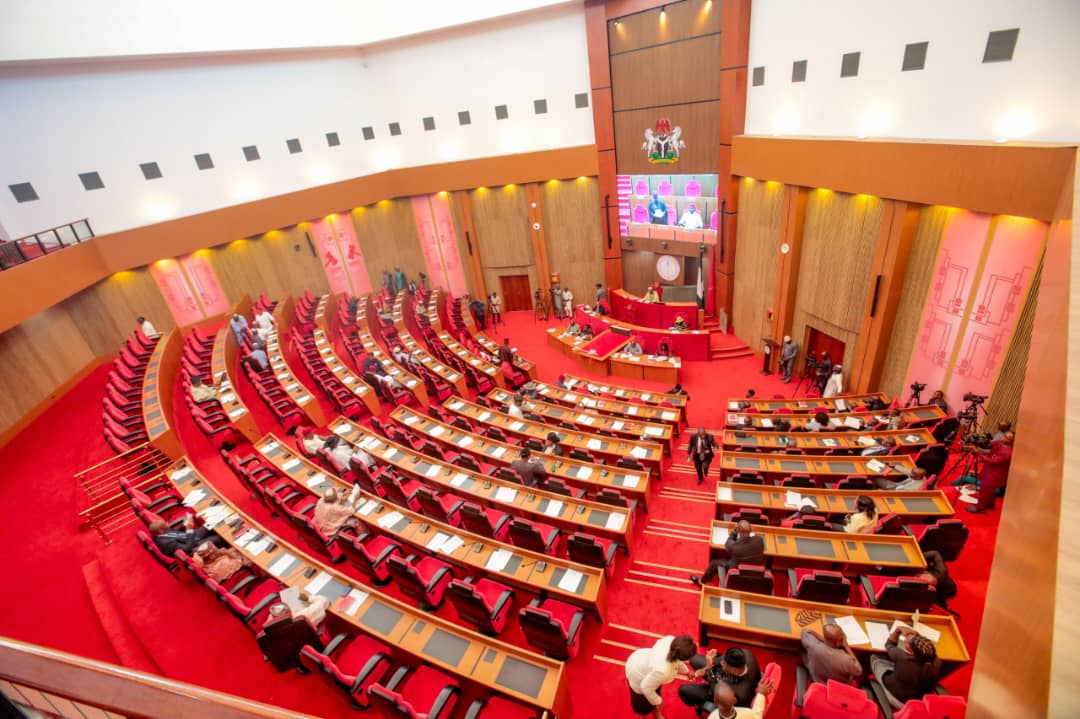
The Nigerian Senate is set to consider a motion seeking to reject the growing international narrative describing the country’s security crisis as a “Christian genocide,” warning that such a mischaracterisation risks inflaming sectarian divisions, distorting global perceptions, and undermining national unity.
The motion, titled “Urgent Need to Correct Misconceptions Regarding the Purported ‘Christian Genocide’ Narrative in Nigeria and International Communities,” is sponsored by Mohammed Ali Ndume, with co-sponsors Sani Musa, Aliyu Magatakarda Wammako, and Ibrahim Bomai.
If adopted, the motion will lead the Senate to formally reject the blanket characterisation of Nigeria’s security crises as a “Christian genocide,” affirming instead that the ongoing conflicts are “rooted in complex socio-economic, ethnic, criminal, and terrorist dynamics which cut across religious lines.”
googletag.cmd.push(function() { googletag.display(‘div-gpt-ad-1718806029429-0’); });
It also urges the Federal Government, through the Ministry of Foreign Affairs, security agencies, and relevant stakeholders, to intensify data-driven public communication by publishing verified casualty figures, providing context, and releasing investigative outcomes to counter misinformation and promote a more accurate understanding of the situation.
The motion further proposes that the Senate call on religious leaders, civil society organisations, and the Nigerian media to exercise restraint and responsibility in their public statements and reporting, warning against the use of language that could “inflame sectarian tensions or misrepresent the national situation.”
Additionally, the motion urges the upper chamber to engage diplomatic missions, particularly the U.S. Embassy, international organisations, and foreign media, to encourage them to rely on verified, balanced, and credible sources, including security agencies, local communities, and independent observers, when reporting on sensitive religious issues in Nigeria.
The motion also seeks to mandate the Senate Committees on Foreign Affairs, National Security and Intelligence, and Information to work with the executive in developing a coordinated national communications strategy to clarify misinformation on religious violence. They are to engage the U.S. Congress, international partners, and diaspora networks through official briefings and fact-based publications to correct misconceptions.
It further calls on the Federal Government to ensure justice and accountability for all victims of violent attacks, whether Christian, Muslim, or otherwise, as part of a broader effort to address impunity and rebuild public confidence in state institutions.
In the draft motion, Ndume cautioned that while Nigeria has witnessed “tragic and unacceptable attacks suffered by Christian communities in parts of the country,” the pattern of violence cannot be accurately described as genocide targeted at Christians.
“This motion seeks to urgently correct the dangerous misrepresentations of Nigeria’s security situation as a ‘Christian genocide,’” he wrote, adding, “While we acknowledge the tragic and unacceptable attacks suffered by Christian communities, it must be recognised that violence has affected Nigerians of all faiths. Mischaracterising the crisis in purely religious terms risks inflaming sectarian divisions, misguiding international policy, and undermining national unity.”
While acknowledging that such reports are often “emotive,” the motion notes that they “fail to reflect the complex realities of Nigeria’s security challenges” and could “fuel sectarian mistrust, distort international perceptions, and undermine national cohesion and Nigeria’s diplomatic relations.”
It also points out that Nigeria’s security challenges have over the years included terrorism, insurgency, banditry, communal conflicts, and targeted attacks, all of which have affected citizens across religious, ethnic, and regional backgrounds. It notes that the violence has “resulted in the loss of lives and property among both Christian and Muslim communities.”
It recalls that the 1999 Constitution of the Federal Republic of Nigeria (as amended) guarantees freedom of religion, equal protection of the law, and obliges government to secure the lives and property of all citizens, irrespective of faith or ethnicity.
The motion further expresses worry over recent developments in the United States Senate and Congress, where legislative initiatives have been introduced to designate Nigeria as a “Country of Particular Concern” (CPC), a classification used in U.S. foreign policy to identify countries accused of violating religious freedom.
According to the motion, such actions “could have diplomatic and economic consequences for Nigeria” if left unchallenged, especially if based on “misleading and unverified reports.”
Ndume and his co-sponsors argue that Nigeria must take proactive steps to clarify facts and engage international partners constructively as leaving such narratives unaddressed could embolden extremist propaganda and worsen existing social divisions.
“Recognising the critical role of accurate information and responsible leadership in preventing sectarian division and countering extremist narratives, the Senate must act to safeguard the truth about Nigeria’s situation,” the motion reads in part.
“Our position is not to deny the suffering of any group,” it continues, “but to ensure that Nigeria’s complex security challenges are not reduced to a misleading religious conflict that distorts our shared reality as one nation under God.”
The post Senate moves to counter “Christian genocide” narrative appeared first on The Sun Nigeria.


