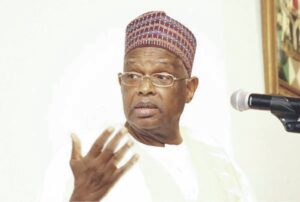


It appears that the opposition African Democratic Congress (ADC) is fast getting its rhythm right and proving to be a formidable alternative to the dominant ruling All Progressives Congress (APC) as we progress to the 2027 election season. The recent defection of former Kano State governor and the strongman of Kano politics, Alhaji Rabiu Musa Kwankwaso, to the ADC has indeed strengthened and even animated the opposition’s moves to square up with the APC in the 2027 general election.
Therefore, it would not be an overstatement to say that the entry of Kwankwaso and his Kwankwasiyya movement to the ADC excites and even animates the opposition whose members and ardent supporters are growing by leaps and bounds on a daily basis. Some commentators are already predicting that the Atiku, Obi and Kwankwaso alliance under the ADC umbrella will give President Bola Tinubu a formidable fight in the 2027 general election, which is slated for January next year, all things being equal, as economists would say.
With the almost decapitation of the Peoples Democratic Party (PDP) and the Labour Party (LP), the only face of opposition and indeed the only existing opposition party remains the ADC. Atiku, Obi and Kwankwaso have formidable and cultic followers across the country. The combination of the trio is enough to change the political equation and redraw the nation’s political map come 2027. The performance of the trio in the 2023 general elections is enough to amply support this claim. The ADC has now come up with articulated and measured response to national issues, thereby decrying the seeming failure of the ruling party and the overt partisanship of the electoral umpire, the Independent National Electoral Commission over the affairs of political parties.
Its National Publicity Secretary, Bolaji Abdullahi, has always risen to the occasion in defence of democracy. Following the defection of Kwankwaso to the ADC, Abdullahi alerted the nation that the APC was putting pressure on INEC to interfere in its internal affairs. He also alleged that there was coordinated effort to destabilize the party because of the defection of Kwankwaso. According to him, “African Democratic Congress (ADC) has observed a coordinated attempt to pressure the chairman of the independent National Electoral Commission (INEC), Professor Joash Ojo Amupitan (SAN), to destabilize the David Mark-led leadership of the party.”
Abdullahi equally pointed out that: “The decision of Senator Rabiu Musa Kwankwaso to join our party has understandably sent jitters through the ruling party. Since then, top officials within the federal government have renewed their onslaught against our party, in a bid to discourage other high-profile figures.” The ADC in the statement issued by Abdullahi said: “For the avoidance of doubt, Nafiu Bala Gombe, who is claiming to be aggrieved over the ADC leadership, was never the chairman of ADC. Any attempt to create a ‘status quo’ that upgrades his position to national chairman of ADC at any point in time is, at best, fictitious.”
As if the ADC warning was not enough, INEC had reportedly delisted David Mark and Rauf Aregbesola from its official portal as National Chairman and National Secretary of the African Democratic Congress (ADC), respectively. The umpire said it would not recognize Nafiu Bala Gombe, who is seeking to be declared the national chairman of the party through the courts. INEC further said that it would suspend recognition of all ADC factions and refrain from monitoring any conventions or congresses organized by groups aligned with the affected leaders. The decision by INEC will remain in place pending the determination of a substantive suit before the Federal High Court.
INEC partisanship and undue interference in this regard has attracted criticisms from concerned Nigerians who feel that the umpire is being manipulated to annihilate the opposition ahead of the 2027 election. The Inter-Party Advisory Council (IPAC) had earlier observed anomalies in the 2026 Electoral Act and warned that some provisions of the law do not serve the interests of Nigerians. IPAC particularly pointed out that “parts of the new law weaken multi-party democracy, restrict the rights of political parties to manage their own affairs, and could affect the credibility and acceptance of the next general elections if left unchanged.”
What concerns INEC with internal affairs of a political party? Some commentators have questioned INEC interpretation of Court of Appeal ruling in ADC matter. This is even coming against the backdrop that INEC never questions nor intervenes in what happens in the ruling APC. The role of INEC is no more than that of a referee in a football game. His role is not to determine or even query how a team selects is players. The current leadership of INEC under the watch of Joash Amupitan is apparently overreaching itself and making it possible for Nigerians to suspect that it is not going to do a credible job as far as the 2027 elections are concerned. What INEC is doing to the ADC now is exactly what it did to the Labour Party and the PDP.
The ADC has expectedly rejected the umpire’s interpretation of the Court of Appeal decision, stressing that INEC acted under pressure from a government, which was scared stiff by the opposition momentum. Abdullahi said the APC-led federal government was still panicky despite its efforts to destroy all opposition parties and foist a one-party rule on Nigeria. “We reject INEC’s interpretation of the Court of Appeal ruling. We knew that INEC was being pressured by a government that has become jittery from the ADC’s rising momentum even in the face of its relentless assault on the opposition parties,” ADC stated. It also said that “INEC’s press statement is full of contradictions that fly in the face of both facts and reason. We shall clarify these contradictions for all to see. What is clear, however, is that INEC has caved to pressure and chosen to side with the government against the Nigerian people.
While the INEC/ADC drama is still unfolding notable Nigerians are dumping their erstwhile parties for the ADC. Governor Bala Mohammed of Bauchi State is another big fish that would soon berth in ADC. When Senator Enyinnaya Abaribe announced his defection to the ADC, the Senate President Godswill Akpabio quickly reminded him to withdraw it because his party, the All Progressives Grand Alliance (APGA), was not in crisis. Akpabio did not do so when other members from these parties defected to the APC. If Abaribe had defected to the APC, many doubt that Akpabio would raise any eyebrow.
What is happening to the ADC, PDP, LP in the name of extinguishing the opposition will destroy our nascent democracy and harm the country greatly. The foundation of Nigeria was based on multi-party democracy. Nigeria has never operated on the dictates of a one-party state. It will not work. Such attempts in the past were vigorously resisted by Nigerians. It is not going to work this time around. The ruling party and government agencies, including INEC and the courts should allow opposition parties to be. Democracy thrives better in an atmosphere of pluralism of views and parties. The unbridled move to a one-party system will lead to collision and catastrophe. Nigeria must avoid toeing that violent path forthwith.
The post Kwankwaso’s defection excites the opposition appeared first on The Sun Nigeria.