
By Chinelo Obogo
Lagos State has emerged as the biggest beneficiary in federal infrastructure spending since President Bola Tinubu assumed office in May 2023, with projects valued at over N5 trillion either under construction or already commissioned in the state.
A Daily Sun review of federal documents, statements from the Ministry of Works and media reports shows Lagos leads all other states by a wide margin in the size and value of federal projects within its borders.
googletag.cmd.push(function() { googletag.display(‘div-gpt-ad-1718806029429-0’); });
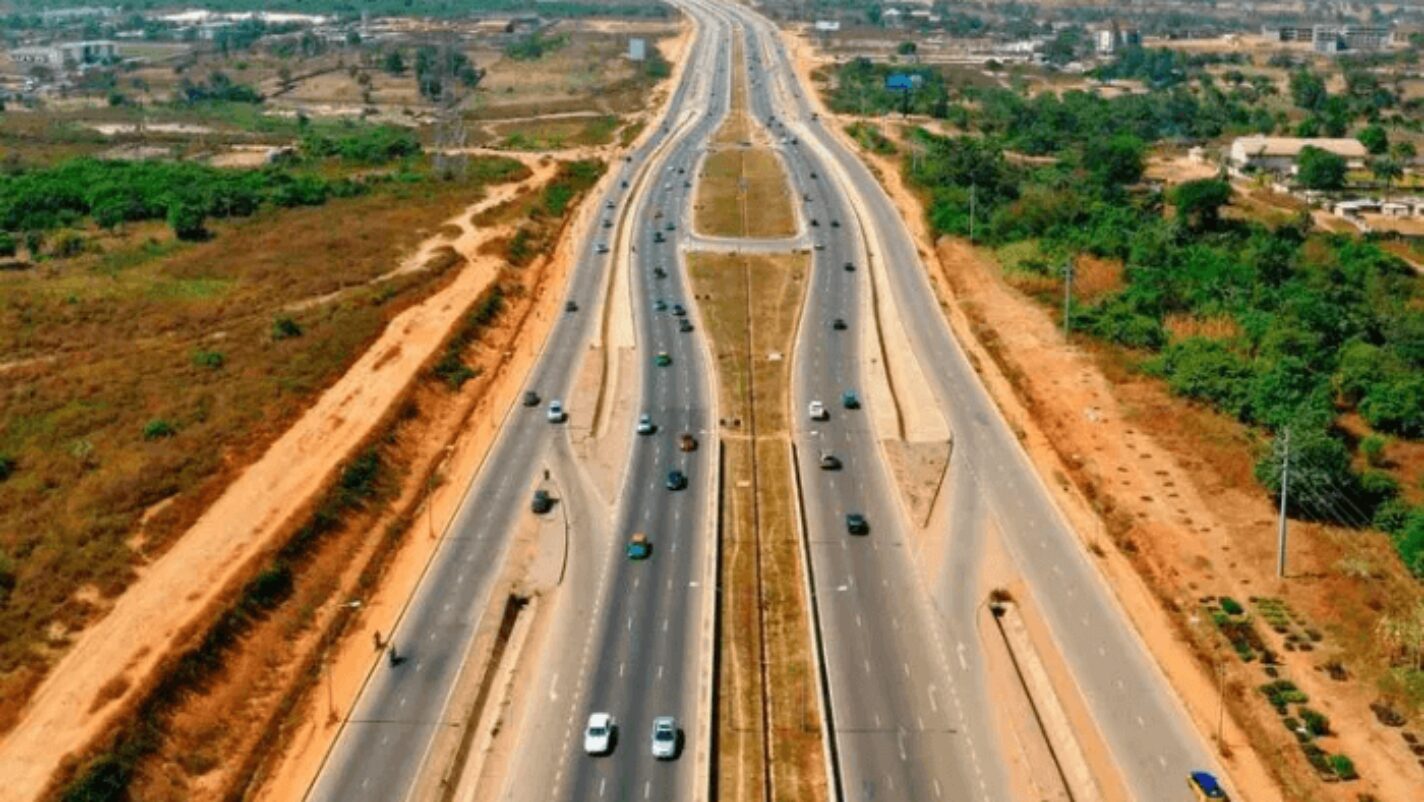
At the heart of this is the ambitious Lagos–Calabar Coastal Highway, a 700-kilometre project connecting nine southern states. In February 2024, the Federal Executive Council (FEC) approved N1.067 trillion for the first phase covering 47.47 kilometres from Victoria Island to Epe. Three months later, another N1.6 trillion was approved for Section 2, which cuts through swampy terrain, multiple flyovers and road links near the Dangote Refinery, Lekki Free Trade Zone and Lekki Deep Sea Port.
By July 2025, federal funding for the coastal highway in Lagos had hit N3.9 trillion, boosted by a $747 million syndicated loan arranged by Deutsche Bank and backed by the Federal Government. Construction began in March 2024 and, in May 2025, President Tinubu commissioned the first stretch of the project, located entirely in Lagos.
“This project is not just a road; it is an economic lifeline. It will open up industries, ports and communities across southern Nigeria,” the Ministry of Works said.
Another massive project in Lagos is the N1.05 trillion evacuation road linking the Lekki Deep Sea Port to inland routes through the Epe–Sagamu axis. Announced in May 2025, the road is being financed by China Exim Bank with federal guarantees. The Ministry of Transportation said the project will reduce port congestion and boost exports.
In aviation, the Federal Government approved N4.1 billion in late 2023 for logistics upgrades and support infrastructure at the Murtala Muhammed International Airport (MMIA), further cementing Lagos’ role as West Africa’s busiest air hub.
While Lagos has taken the biggest slice, federal funding has also flowed to other regions. The Abuja–Kaduna–Zaria–Kano Road, originally valued at N740.79 billion, received an additional N507 billion in March 2025. The Sokoto–Zamfara–Katsina–Kaduna Road is pegged at N825 billion, while the Maraba–Keffi expansion costs N73 billion. Work on the Akwanga–Jos–Bauchi–Gombe Superhighway is at the design stage.
In the South-South, projects include the N200 billion Bodo–Bonny Road in Rivers, the N150 billion Nembe–Brass Road in Bayelsa, the N76 billion Eket Bypass in Akwa Ibom and the N186 billion Section 2 of the East–West Road.
The South-East has also seen significant investments. Between late 2023 and mid-2024, the Federal Government allocated N627 billion for five projects covering 293.5 kilometres across Enugu, Anambra, Ebonyi and Imo.
These include the reconstruction of the Enugu–Onitsha Road, split into two phases worth N352 billion; the Second Niger Bridge Access Road in Anambra, valued at N175 billion; the Enugu–Abakaliki Road covering 36 kilometres; and the Imo–Enugu Road along the Lokpanta Corridor, valued at N100 billion.
Despite these projects, analysts say Lagos remains the clear focus of federal spending. With projects worth more than N5 trillion in two years, the state has drawn more than any other region, reflecting its economic weight and Tinubu’s determination to accelerate infrastructure in Nigeria’s commercial capital.
“Lagos is Nigeria’s window to the world. Strengthening its infrastructure is not just a local priority but a national imperative,” a senior government official told Daily Sun.
The post Lagos tops with N5trn federal projects in 2 years appeared first on The Sun Nigeria.