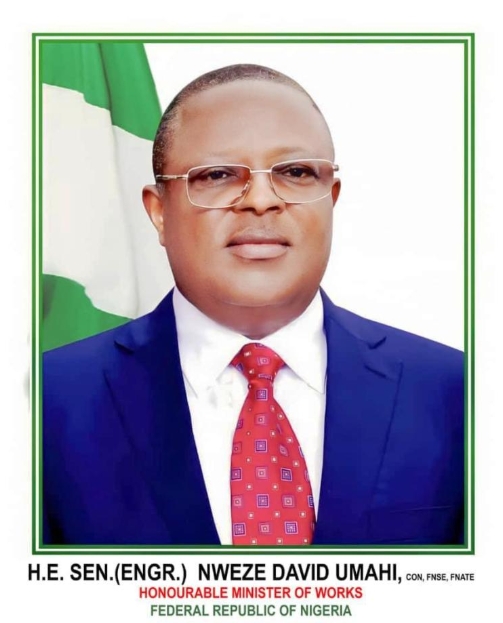

Umahi Expands EastWest Road Project is gaining national attention. The Federal Government is intensifying reconstruction works on the highway.
The East-West Road connects major oil-producing states. These include Delta, Bayelsa, Rivers, Akwa Ibom, and Cross River. The road supports key economic corridors in the South-South region.
Under the leadership of David Umahi, the project has shifted toward modern construction methods. This change forms part of a broader infrastructure strategy under President Bola Ahmed Tinubu.
Shift to Reinforced Concrete Technology
The project now emphasizes reinforced concrete pavement. This replaces the traditional asphalt method used in earlier construction phases.
According to reports, concrete roads offer stronger durability. They also resist flooding and heavy traffic better than asphalt surfaces.
David Umahi explained that many sections pass through flood-prone areas. Because of this, concrete was chosen as a long-term solution.
The government believes the new design could last 50 to 100 years. This reduces repair costs and frequent road failures.
In addition, the upgraded sections include drainage systems, bridges, flyovers, culverts, and solar-powered streetlights.
Key Road Sections Under Construction
Several sections of the East-West Road are currently under active reconstruction. Progress continues across multiple corridors.
One major section is the Eleme Junction to Onne Junction route in Rivers State. Contractors are using reinforced concrete for this segment.
The Federal Government has instructed contractors to speed up delivery. At the same time, it has insisted on strict quality standards.
David Umahi has also warned contractors against delays. He has threatened contract termination for poor performance.
Other ongoing sections include Ahoada to Kaiama and parts of the Port Harcourt–Warri axis. These areas are also receiving bridge and flyover upgrades.
Long History of Project Delays
The East-West Road project began around 2006. It was first awarded during the administration of President Olusegun Obasanjo.
However, the project faced many challenges. These included funding gaps, contract disputes, and design changes.As a result, completion was delayed for nearly two decades. Several sections remained unfinished for years.
The current administration inherited these incomplete segments. It later restructured the project to improve accountability and execution speed.
Reports suggest that total investments in the corridor now exceed ₦1 trillion.
Economic Importance of the East-West Road
The East-West Road plays a key role in Nigeria’s economy. It connects industrial and oil-producing communities in the Niger Delta.
It also supports trade movement and oil operations. In addition, it improves regional transportation and logistics.
Government officials say the project supports national development goals. It also aligns with the Renewed Hope infrastructure agenda.
Therefore, the road upgrade is seen as critical to long-term economic growth. It also strengthens connectivity across the South-South region.
In Conclusion,Umahi Expands EastWest Road Project highlights a major shift in Nigeria’s infrastructure approach. The use of reinforced concrete marks a new direction in road construction.
Through ongoing works across Rivers, Delta, Bayelsa, and other states, the Federal Government continues its modernization drive.
Overall, the project aims to deliver durable infrastructure that supports economic growth and regional development.