
• Health sector groans, doctors to begin industrial action August 18
• What medical workers want from FG
By Oluseye Ojo and Fred Ezeh, Abuja
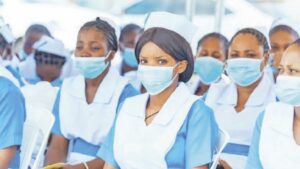
Nigeria’s health sector witnessed unprecedented disruption between Wednesday and Friday due to the nationwide warning strike by nurses under the umbrella of the National Association of Nigeria Nurses and Midwives (NANNM).
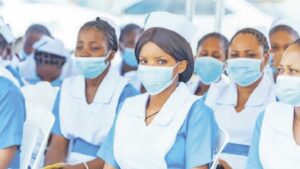
The strike was called off yesterday after a meeting by the officials of the NANNM and those from the Ministry of Health, led by the Minister of Health, Alli Pate.
But doctors under the umbrella of Nigeria Medical Association (NMA) have also threatened to embark on a nationwide strike in a few days time, perhaps, at the end of their 21-day notice of strike already given to the government.
The warning strike by the nurses was expected to last for seven days, but was halted after three days, during which patients underwent harrowing experiences across Nigeria.
The development has, expectedly, visited pains and frustration on millions of health-seeking Nigerians across the country, forcing many of them, especially those who could afford it, to seek alternative services at private health facilities.
But the nurses insisted that the nationwide strike was the last option for them, noting that the government has been “insensitive” to their plight and that they had endured the frustration for several years, hoping that government will attend to their needs.
“Strike seems to be the only language the government understands, and that’s unfortunate because of the sensitive nature of our role in quality health care services,” the nurses’ union said.
What nurses want
The leadership of the nurses’ union highlighted nine areas of concern that needed government’s attention, and they include the gazetting of the nurses scheme of service as approved by the National Council on Establishment (NCE) in 2016; implementation of the national industrial court judgment of 2012 (Suit No: NIC/AB316/2020); upward review of professional allowance for nurses and midwives.
Others are mass recruitment of personnel and adequate provision of health facility equipment; creation of a department of nursing in the federal ministry of health; inclusion of nurses in the headship of health policy-making bodies; fair representation by NANNM on the board and membership in FHIs; centralization of internship posting for graduate nurses; and consultancy for nurses and midwives.
NANNM President, Comrade Haruna Mamman, said the current situation being witnessed in the health sector was highly anticipated, and the health sector will soon experience unprecedented manpower crisis because the government has been “lackadaisical” on issues of nurses’ and midwives’ welfare, as well as the conditions of their service.
“Just take a look at the scheme of service for health workers, particularly the nurses which was approved in 2016, but has not been gazetted nine years after. It has greatly affected career growth and remuneration for the nurses.
“For instance, in some states, nurses of different cadre receive different salary and other entitlements, and that was because of the absence of the gazetted scheme of service which would have clearly explained what someone’s entitlement at what level.”
He also made reference to the issue of Industrial Court judgment that has not been implemented, as well as the unanswered request for the decentralisation of internship opportunities for those who have graduated from nursing schools, and are seeking an opportunity for an internship.
He said: “We have endured years of unmet promises in this country. We had also refrained from industrial action for years in the hope that our concerns would be addressed. The national industrial court judgment was delivered in 2016, yet implementation remains elusive. Our patience is already wearing thin because we have obviously reached the breaking point.”
Schools’ proliferation
The leadership of NANNM recently raised fresh concerns about the growing proliferation of medical and nursing schools across the country with little or no supervision from the Nursing and Midwifery Council of Nigeria (NMCN).
NANNM National Secretary, Dr Thomas Shettima, who led the campaign against the development, said such action was not the solution to the migration to other countries by Nigerian health workers.
“By the time you have produced these nurses that you can not employ and pay adequately, it becomes a challenge to quality healthcare. These nurses, undoubtedly, have already acquired the knowledge, unable to go outside but remain in the society. If they are in the society and are jobless, but they have the knowledge and are approached for any treatment for their services, they will definitely render the services. In rendering the services, some could go outside their ways because they must survive.
“Therefore, if we want to curtail the ‘japa’ syndrome, we must first ask ourselves, why are people going outside the country? If we get the answer, then we will be able to address it. In fact, all professionals are moving outside Nigeria, particularly the nurses, because the welfare, their condition of service, and welfare are not good enough here.
“For instance, there are some allowances of nurses and midwives that have not been reviewed for over 30 years now. And any call to review that is always met with resistance. For a more durable solution, the government needs to sit with the relevant authorities and unions, particularly in the case of the nurses and midwives, to discuss the way forward.
“So, opening 1,000 schools of nursing in every state will never be a solution to ‘japa’ and quality service delivery. People will still look for a better condition of service. But if we improve our own here, and then train qualified persons to handle our health care, I want to believe it’s the solution to ‘japa’ syndrome.”
Issues with NMCN
Last year, the Nursing and Midwifery Council of Nigeria (NMCN) released a new guideline for verification of nurses’ certificates and other related issues. The decision sparked national protest from nurses who described the new verification guidelines as choking and unacceptable. Hence, they demanded that it should be withdrawn immediately.
But the Registrar of the Council, Dr. Faruk Umar Abubakar, afterwards, insisted that the Council wouldn’t withdraw the circular because it was aimed at checkmating the illegal activities of nurses, particularly those that might have chosen to travel abroad to practise
“The intention was not to witch-hunt anyone or slow down their career. Rather, it was designed to promote and strengthen professionalism in the noble profession and also protect the profession from quacks. Some of these nurses abscond from duty for days and even weeks, only for you to hear they have left the country for professional practice abroad with no proper resignation notification. That’s unprofessional. Please note that we are not against foreign practice, but it’s expected that it be done formally and rightly.
“For instance, in the last three years, over 42, 000 nurses left Nigeria for foreign practice. In 2023 alone, over 15, 000 nurses left Nigeria to practise abroad. These are manpower that were trained in Nigeria but chose to work outside Nigeria for whatever reason, which they are at liberty to do. It’s a plus for our reputation and our economy, but our people back home also need their services. But one thing is certain, they must leave the country and the local practice the right way and not what’s obtained now.”
Search for solutions
Meanwhile, the Federal Ministry of Labour and Employment has been trying to resolve issues with the striking nurses.
Saturday Sun gathered that officials of the ministry have met with NANNM officials on the strike.
Rilwan Olajide, National Chairman of FHI Nurses, confirmed that the Federal Ministry of Labour and Employment met with the leadership of NANNM on Monday for discussions, but no resolution was reached because some officials of other relevant ministries, especially Federal Ministry of Health and Social Welfare and Head of Service were absent.
It was also gathered that the meeting continued on Wednesday and Thursday in search of solutions to the industrial action that has affected smooth health care service delivery.
And doctors enter fray
But the situation with the health sector might even worsen, as the doctors across the country, under the Nigerian Medical Association (NMA), have given the Federal Government a 21-day ultimatum, effective from July 27, 2025, to meet a 19-point demand, failing which they would also embark on a strike.
The NMA’s demands include a pay rise for all medical and dental practitioners, immediate settlement of outstanding arrears, including 25-35 per cent CONMESS adjustment, clinical duty, accoutrement allowances, withdrawal of the June 27, 2025, circular on salary review, honouring collective bargaining agreements and implementing consequential adjustments, payment of the 2025 Medical Residency Training Fund (MRTF) and reviewing it to reflect current economic realities, correction of discrepancies between CONMESS and CONHESS to ensure strict compliance with relativity in professional allowances, compliance with the 2021 collective bargaining agreement on hazard allowance, provision of comprehensive health insurance coverage for medical and dental practitioners, and constitution of management boards for federal hospitals to enhance governance and operational efficiency.
The implementation of specialist allowances for all doctors, scarce skills allowances for medical consultants, approval of excess workload allowances for all doctors, issuance of a circular implementing the reviewed retirement age for medical and dental practitioners, implementation of robust welfare and well-being packages for healthcare workers, are also among the demands.
Doctors: It’s full implementation or strike
The Chairman of NMA in Oyo State, Dr Happy Adedapo, appealed to Nigerians to help doctors talk to the Federal Government, based on the demands of the association.
“There is an ultimatum from our association to the government before we embark on strike, and we have a 19-point demand. The only demand that the government acceded to so far is the withdrawal of the circular on salary review. But we have told them that we want our full demands to be met, otherwise, the strike might by inevitable.”
He continued: “Most of the things we are agitating over are not really new. In 2001, we had a collective bargaining agreement with the Federal Government. After the roundtable discussions, the government agreed to implement our demands.
“In 2009, we had to come back for the same thing. Then, the Federal Government said it accepted the fact of the agreement. It promised to implement the agreement again.
“In 2014, we went back to the negotiation table, the government still posted us.
“But the events of the past two years since the inception of the present leadership in the country, showed that fuel subsidy was removed and floating of naira actually took place. The doctors have been pauperised.
“Every sector of the economy in one way or the other has been stabilised. A man selling a bag of cement for N3, 800 two years ago, is now selling it for N10,500. The cost of transportation that was N100 two years ago, is now N300. Food prices have also gone up. But the salary has remained the same.
“The prevailing circumstances have made us realise that a doctor cannot even survive. The take-home pay cannot even take you home anymore. We are not even talking of doctors alone, but the health sector.
“As we speak, minimum wage has not been implemented for doctors; the same minimum wage that every workforce in MDAs has been captured.
“Then, the government noted that things are tough and rough, and came up with the idea of N35,000 wage award for all health workers, payable monthly. From January 2024 till date, government probably paid thrice. Now, we have arrears of about 15 months. How do we keep pretending as if all is well?”
The NMA chairman in Oyo State suggested that the government might do well if it convokes a healthcare summit.
“Let all stakeholders, including doctors and nurses, the Minister of Health, and Minister of State for Health, come together and see what exactly we need to do to actually get out of the woods,” Adedapo stated.
Answering questions on brain drain in the medical profession, Adedapo noted that the Minister of Health and Social Welfare rolled out a figure recently that within the past two years, 10,000 doctors have migrated abroad from Nigeria. He said he agreed with the figure.
The Minister of Health, Alli Pate also said recently that over 16,000 medical doctors have relocated to other countries within the past five years.
Adedapo, however, said the situation has continued to worsen as majority of young doctors preferred working abroad to practising in Nigeria.
He noted that on the NMA register, there could be about 55,000 registered Nigerian doctors. He added that between 33,500 among them are still practising in the country.
He explained that among those who are on the register that they are practising in the country, a number of them have also relocated but are only maintaining their registration in Nigeria.
He stated that about 18,000 Nigerian doctors now work in the United Kingdom, United States, Canada, and South Africa, while others also practise in other countries. As gathered, about 11,000 of the staff in the United Kingdom National Healthcare System (UKNHS) are Nigerians.
“Then, well over 16,000 doctors have left Nigeria in the past five years. Within the past two years alone, more than 10,000 doctors have left Nigeria, as revealed by the Minister of Health and social welfare. Then, the number keeps increasing.
“Then, infrastructure deficit is also there. We also have to talk about power supply to teaching hospitals like University College Hospital. The Federal Government promised 50 per cent electricity rebate for hospitals. But there has not been any circular to back it up. Hospitals are still paying full electricity bill. A teaching hospital was disconnected from power supply for three months.
“Then, we have about 6,000 to 7,000 consultant doctors in Nigeria. A number of them have relocated abroad, some have retired, and some are about to retire. The retirement age for consultants is 60 years. We have asked for extension and the government has agreed. But there is no circular to back it up till now.
“The danger is that many young doctors don’t want to take up government job anymore. Also, many of them prefer to do their residency programme outside the country and stay there.”
$2billion spent annually on medical tourism
A retired bank executive, Dr Akeem Yusuf, quoting the Central Bank of Nigeria (CBN). Said a humongous amount is being spent by the Nigerian elite on medical tourism annually.
Yusuf, who spoke on a recent current affairs programme – ‘Matters Arising’, of the Broadcasting Corporation of Oyo State (BCOS), stated: “From official CBN Foreign Exchange Allocations, we spend $2billion annually on medical tourism, not just our leaders, but the elite generally.
“For the leaders, that is another problem, because they are spending our commonwealth to obtain foreign treatment.
“Then, other individuals collectively go to CBN to purchase $2billion annually for medical tourism.
“To actually go on medical tourism, they need to fly abroad. So, they have to buy tickets.
“How much do foreign airlines remit to Nigeria annually? They remit about $4billion every year to Nigeria in ticket sales, after paying taxes to the Federal Government. So, that makes it $6billion.
“Some people are going to schools. Nigeria has over 100,000 students in tertiary institutions abroad. Collectively, they spend about $3billion annually on school fees.
“All these figures are from CBN. We are not talking of private individuals who have money in their domiciliary or offshore accounts, who are able to fund it from their accounts without going through the CBN.
“So, if we add the $3billion to the $4billion of air tickets, that is $7billion, and if you add it to the $2billion of medical tourism, that is $9billion.
“Then, we have a lot of Nigerians, who believe they are doing well, going on holidays and doing destination weddings. These gulp an additional $6billion.
“With all these, we are sucking out $15billion annually from the Nigerian economy to service foreign economies.
“Imagine if we put that $2billion on medical tourism into healthcare system annually, what will our healthcare look like?”
FG’s efforts
Last year, President Bola Ahmed Tinubu signed a policy document titled “National Policy on Health Workforce Migration” designed to discourage the migration of health workers, and possibly bring about a reversal of the brain drain challenge.
Deconstructing the document, the Minister of Health said the policy will provide clear guideline to strategically manage health workforce migration that, expectedly, would address the fundamental problems of the shortage of skilled healthcare professionals in Nigeria, particularly in rural and underserved areas.
It proposes the deployment and application of bilateral and multilateral agreements on recruitment of health professionals, while respecting the freedom of health workers to migrate, and that such agreements should provide a basis to favour in-country migration and facilitate circular or return migration for critical skills.
The Minister said the policy document also recommended a good working package/incentives for health workers who choose to remain in the country especially those who choose to serve in rural and deprived parts of the country; those in training programmes in the country, and providing necessary equipment and commodities to deliver quality care.
He also confirmed active engagement with key associations, notably NMA and NANNM. “We have engaged with the leadership constructively, extended negotiation deadlines, and are attending to their outstanding arrears, with the Minister of Finance overseeing disbursement plans,” he stated.
The post Nurses: Real reasons we downed tools appeared first on The Sun Nigeria.