
By Oluseye Ojo (Ibadan); Tony John (Port Harcourt); (Onitsha); (Jos)
Patients in government-owned hospitals across the country went through considerable pain and agony following the seven-day warning strike by nurses union.
In Benue State, while the seven-day warning strike intensified, an elderly woman, Mrs Christiana Aba, narrated how she almost lost her daughter at the Benue State University Teaching Hospital (BSUTH) in Makurdi.
The mother, who was thankful to God for saving the situation, told Saturday Sun’s Scholastica Hir that her daughter made it to Friday morning by the special grace of God.
She said: “Since the nurses went on strike, we were here with just two persons working in female and male wards taking care of all the patients alone.
“Yesterday (Thursday), after the only nurse available fixed a drip on her, they were also supposed to transfuse blood for her but after the drip finished, there was no nurse on ground to transfuse the blood. He was busy in another ward.
“In the middle of the night, she almost gave up. I had to start screaming and crying for help. It was in the early hours of today (Friday) that the blood was transfused.”
Our correspondent reports that the situation in the public hospitals in Benue state is very pathetic as most patients discharged themselves due to lack of nurses’ care at the hospital.
When Saturday Sun visited the Federal Medical Centre (FMC) and the general hospital at North Bank, most patients were seen looking stranded.
Some of the patients and their relatives were seen directing motorcyclists to take them to the Teaching Hospital where contingency plans were said to be available.
At the teaching Hospital, it was observed that patients were trooping in from other hospitals to receive treatment.
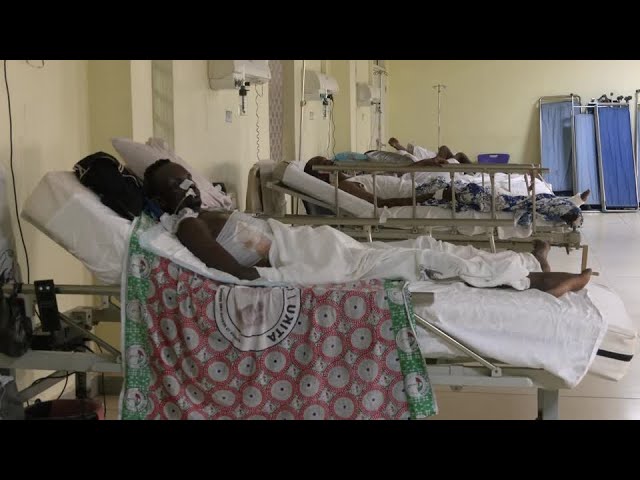
The female and male emergency ward in BSUTH, among other wards, were filled with patients while others were seen on beds placed in the hospital hallways.
Mrs Igwe Janet was seen writhing in pain and calling for attention. Her relative, Mr Igwe said they were formerly admitted in FMC but had to leave because of the strike. “Nobody was there to attend to us. We had to leave,” he said.
In Borno State, Timothy Olanrewaju reports that medical doctors and other health personnel have taken up some healthcare roles in public hospitals in Borno following the warning strike by nurses.
At the University of Maiduguri Teaching Hospital (UMTH), doctors and auxiliary health workers took up some basic roles of nurses to provide healthcare services to patients.
Some of the wards hitherto controlled by nurses were manned by doctors. They assisted in checking patients’ temperature, pulse, blood pressure and respiration.
Also at the Borno Specialist Hospital, Mamman Shuwa Hospital (Nursing Home) and Umaru Shehu Hospital, some auxiliary health workers assisted in patient movement in the wards, administered medication, dressed wounds and played other roles that should have been carried out by the nurses.
Some patients said the warning strike significantly affected service delivery in the hospitals.
“Patients have not been getting much attention from the doctors since Monday because of the strike. It’s not been easy for the doctors and supporting staff to do all the nurses’ work,” a patient’s father told Saturday Sun.
As reported by Noah Ebije, the strike took a toll on most of the major federal medical institutions in Kaduna State, with some of them providing skeletal services.
At Shika Teaching Hospital, Zaria, it was gathered that management staff from Level 12 and above were providing skeletal services, while nurses stayed away from duty posts.
Most of the wards within the hospital were deserted, with some patients being moved to private hospitals to continue with medical treatment.
In Imo State, the strike affected smooth operations of medical service delivery at the Federal University Teaching Hospital in Owerri.
Our correspondent, George Onyejiuwa, who was at the hospital, reports that patients were stranded.
Saturday Sun further reports that patients looked frustrated as nurses were not available to take their health vitals like blood pressure, sugar level, and temperature before they could see the doctors.
Mrs Chineye Ogu said she brought her son for treatment but that there were no nurses to attend to them. She said that she was not aware that nurses were on strike.
“We were given an appointment for today (Friday) to see the doctor because my son has been unwell. So when we got here this morning, I was told that the nurses were on strike and there was nobody to attend to him. Even the doctor was not around either,” the distraught mother said.
Similarly, Mrs Anne Okere, who was at the hospital for antenatal checks, said that there were no nurses to attend to her and others.
“I came around 6.30 am this morning so that I can see the doctor on time because today is always crowded but there was no nurse to check our vitals as they were said to be on strike.
In Cross River State, the strike by nurses recorded total compliance by nurses across the state.
At the General Hospital Calabar for instance, all the wards were vacated as patients were sent home while new ones were not admitted to the hospital, as reported by Aniekan Aniekan.
Only out-patients were attended to by the doctors and no emergency cases were handled in the hospital as about 190 nurses downed tools.
At the Federal Medical Centre (FMC), Umuahia, authorities at the health facility also sent patients away due to the seven-day warning strike declared by the National Association of Nigeria Nurses and Midwives.
It was gathered at the facility on Thursday that authorities there stopped admitting new patients, while providing skeletal services for emergency cases only.
Some patients at FMC who spoke to Okey Sampson expressed worry over the strike. They equally appealed for the immediate resolution of the trade dispute to save them the agonies they were passing through.
Patients were in quandary at the Nnamdi Azikiwe University Teaching Hospital (NAUTH), Nnewi, Anambra State, as the strike crippled health services.
Doctors were forced to discharge the patients having been overwhelmed by the industrial action of the nurses who downed tools, most wards visited by our reporter, Aloysius Attah, were vacated. However, some patients stayed back still hoping to be attended to by the medical personnel.
Some of the wards and their administrative unit devised means of using the services of some benevolent nurses who offered skeletal services without putting on their uniforms.
Nkechi Njoku, a mother to one of the patients, told our reporter that her family resorted to taking the painful decision of going to a private hospital in town for her daughter’s sickness, a step she said they didn’t want to take initially because of the cost implications.
Nurses at the University of Port Harcourt Teaching Hospital (UPTH) joined the nationwide strike that paralysed nursing services across public health institutions in Nigeria, including UPTH.
The strike significantly disrupted healthcare services at UPTH, with patients being discharged or transferred to private hospitals.
While there was no specific information on casualties or deaths directly attributed to the nurses’ strike at the teaching hospital, some stranded patients lamented their inability to access treatments.
A devastated mother of a patient, Mrs. Aleruchi Ovundah, whose son sustained multiple injuries from a motor accident, lamented that even in the critical situation of her son, Morgan, the nurses did not attend to him.
Saturday Sun’s Tony John gathered that patients at the Intensive Care Unit (ICU), whose life-threatening condition requires 24 hours service, were the most hit by the strike.
A visit to the University College Hospital, Ibadan, showed that the strike paralysed nursing services in the teaching hospital, like other federal public health institutions in the country.
However, although the leadership of the National Association of Nigeria Nurses and Midwives, UCH Ibadan branch claimed that the warning strike had a100 per cent compliance, doctors at UCH and other health workers were seen carrying out their duties, as reported by Oluseye Ojo.
In Jos, Plateau State, patients resorted to using private hospitals. Our correspondent, Jude Owuamanam, who visited the federal government institution, observed patients leaving the facility as the industrial action crippled service delivery.
Among the patients, however, those with terminal illnesses found it difficult. For instance, a patient on dialysis (names withheld) told our correspondent that it was difficult for him to find a facility where he could continue the treatment at an affordable cost.
At the FMC Yenagoa, Femi Folaranmi reports that the hospital has stopped taking patients with emergencies, while patients with critical care have been discharged to go home.
The situation is not different in General Hospital, Okolobiri, as most of the patients who require the services of nurses are discharged.
A frustrated father of a patient at the FMC, Mr Dennis Agidi, whose son requires surgery, lamented the sad development that has forced the hospital to reschedule his son’s surgery to the second week of August.
“It is frustrating that the government cannot just do the right thing and allow situations to degenerate to strike. My son’s critical surgery has been postponed to the middle of August because of the strike. This is saddening.”
The post Nurses strike: Patients recount pain, agony at govt hospitals appeared first on The Sun Nigeria.