
The President Tinubu April 2026 achievements reflect a month of decisive governance, combining infrastructure development, economic policy execution, and strategic leadership changes. Throughout April, Bola Ahmed Tinubu led key national engagements that reinforce his administration’s focus on long-term economic stability and growth.
This period highlights a broader strategy centered on capital investment, institutional strengthening, and improved public sector performance.
Infrastructure Expansion in Ogun State
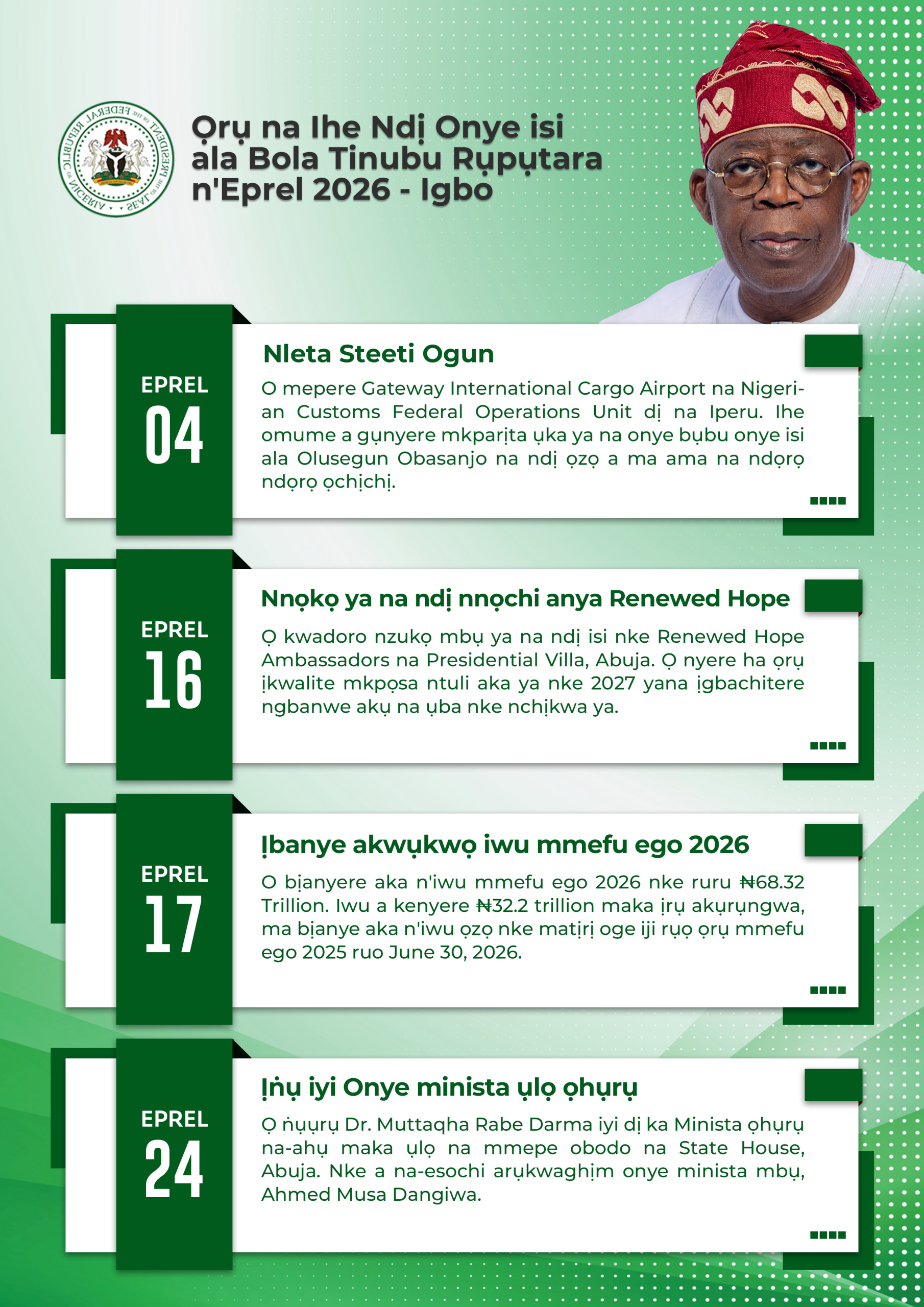
One of the President Tinubu April 2026 achievements was the state visit to Ogun State,On April 4th,where the Gateway International Cargo Airport in Iperu was commissioned. This project is expected to significantly improve Nigeria’s logistics capacity by enhancing cargo handling and supporting export-driven industries.
The airport’s strategic location near Lagos positions it as a key hub for trade, potentially reducing congestion at existing facilities while improving supply chain efficiency.
In addition, the President inaugurated the Nigeria Customs Federal Operations Unit facility, aimed at strengthening border security, reducing smuggling, and improving revenue collection.
The visit also included high-level engagements with Olusegun Obasanjo, reflecting continued collaboration on regional development priorities.
Strengthening Political Mobilization
On April 16, President Tinubu hosted leaders of the Renewed Hope Ambassadors at the Presidential Villa in Abuja. This meeting focused on expanding grassroots engagement and improving communication around government policies.
The Renewed Hope initiative serves as a platform for mobilizing public support and increasing awareness of ongoing reforms. Participants were encouraged to actively engage communities and promote understanding of economic policies.
This approach reflects a governance model that combines policy implementation with active citizen engagement, ensuring that reforms are not only introduced but also understood and supported.

Signing of the 2026 Budget
On April 17 A major highlight among the President Tinubu April 2026 achievements was the signing of the ₦68.32 trillion 2026 Appropriation Bill into law, the largest budget in Nigeria’s history.
Approximately ₦32.2 trillion—nearly 50% of the total—is allocated to capital expenditure. This capital-heavy structure signals a shift toward infrastructure development, including roads, energy, housing, and transportation systems.
From a macroeconomic perspective, this approach is designed to stimulate growth by increasing public investment, creating jobs, and improving productivity across sectors.
However, the budget also reflects existing fiscal pressures. Allocations such as ₦15.8 trillion for debt servicing highlight the ongoing challenge of managing public debt while funding development.
In addition, the President approved the extension of the 2025 capital budget implementation to June 30, 2026. This decision ensures that ongoing infrastructure projects are completed, reducing waste and improving project continuity.
Housing Leadership Change Fostering Economic Development
Another key development was the swearing-in of Muttaha Rabe Darma as Minister of Housing and Urban Development, following the exit of Ahmed Musa Dangiwa.
The housing sector plays a critical role in economic development, with strong linkages to construction, employment, and urban planning. This leadership transition is expected to accelerate efforts to address Nigeria’s housing deficit, which remains a major challenge.
Improved policies in this sector could stimulate private investment, enhance urban infrastructure, and expand access to affordable housing.
Broader Economic Implications
The combined impact of these activities reflects a coordinated strategy aimed at structural transformation. Infrastructure investments improve productivity, while policy reforms enhance fiscal stability.
At the same time, stakeholder engagement ensures that reforms gain public support, increasing the likelihood of successful implementation.
These elements are critical for achieving sustainable growth, particularly in a complex economic environment characterized by inflation, exchange rate volatility, and global uncertainties.
Looking Forward,The President Tinubu April 2026 achievements demonstrate a focused and multi-dimensional approach to governance. Through infrastructure expansion, budget reforms, and leadership adjustments, the administration is positioning Nigeria for long-term economic development.
The success of these initiatives will ultimately depend on effective implementation, fiscal discipline, and continued alignment between policy and execution.