
“The object of power is power.”
—George Orwell (1984)
By Enyeribe Ejiogu
It was J.R.R. Tolkien who made the seminal statement, “No victory without suffering” while discussing his personal experiences and his Catholic faith. Stated in the original Latin, Vincit qui patitur, it means “he who suffers conquers.”
In the contest for power, victory requires immense effort, strategic patience, and internal strength. This aligns with what Thomas Paine wrote in one of his works, “The harder the conflict, the more glorious the triumph,” while Louis L’Amour took it a step further, and explained that “victory is not won in miles but in inches. Win a little now, hold your ground, and later win a little more.”
United States President Donald Trump loves to use the expression “never before seen,” which now applies to the speed with which President Ahmed Bola Tinubu assented to the amended Electoral Act within hours of the National Assembly delivering the Bill it had passed to his table. From the day he assented to the Electoral Act, the dawn broke on the 2027 General Elections despite the fact that the Independent National Electoral Commission (INEC) has not yet declared an open season for electioneering campaigns. But trust Nigerian politicians, they are already operating in overdrive.
It is not for nothing that commentators liken Nigerian politicians to the metaphoric cat with nine lives. They are remarkably resilient, imbued with survival instincts, and the ability to bounce back from severe political crises, scandals, or electoral defeats. They are super-optimists who lose elections and then head to the tribunals with a strong and somewhat insane belief that they will achieve a favourable outcome. Oftentimes, they do achieve the goal as the tribunals deliver head-scratching judgments that befuddle.
The Nigerian political landscape is characterized by high stakes, treachery, and rapid changes, leading observers to describe certain seasoned, influential, or “godfather” figures as having multiple lives.
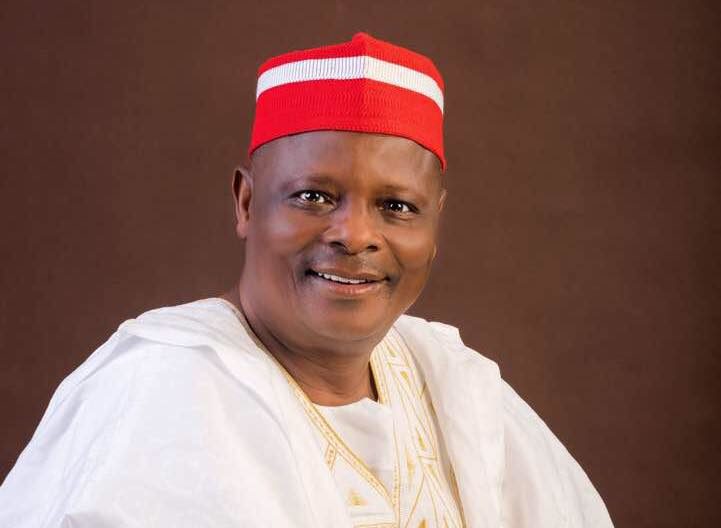
Former Kano State governor, Senator Rabiu Kwankwaso, is one politician that fits the mould of a political cat with nine lives. When the twilight of the eight-year tenure of Muhammadu Buhari administration showed on the electoral horizon of the country and long before the jostling for succession began, Kwankwaso moved to establish the New Nigeria Peoples Party (NNPP), the platform he used to install Abba Kabir Yusuf as governor in Kano State and some legislators at the state and federal levels.
He also contested the presidential election on the NNPP platform, after he had dismissed Peter Obi of the Labour Party as a political paperweight. He considered it beneath his person to accept the position of Obi’s running mate in the 2023 election. But with less than two years to the 2027 General Election, the table turned in his relationship with Abba Yusuf, leaving him with ash in his mouth, as the Kano State governor dumped the NNPP and pitched his tent with the All Progressives Congress, APC.
It is to be particularly noted that Abba was wooed into the APC by Dr Umar Ganduje, the state’s former governor, who was once an ardent Kwankwassiya protégé of Kwankwaso. Kwankwaso had made Ganduje governor in 2015 in the early days of the APC, after previously serving as Kwankwaso’s deputy. Tectonic political shifts in Kano politics led to Kwankwaso experiencing a taste of political treachery, when Ganduje turned against him, determined to demolish his legacy and erase his footprints on the political map of Kano State. Nigerians would easily recall the enthronement and dethronement saga that embroiled the old Kano Emirate resulting in the carving out of new emirates from it. The dust raised by that saga is yet to settle.
Really, Kwankwaso is a man well acquainted with betrayal, having experienced it twice. He also wears controversy like he don his well-tailored, exquisitely embroidered dansiki and babariga with the signature red kwankwassiya cap that adds to the sartorial image he cuts, when he strides through the corridors of power.
Without question, Senator Rabiu Musa Kwankwaso is a cat with nine lives. He has shown “exceptional ability to survive political setbacks, reinvent himself, and remain a dominant force in Nigerian politics despite significant losses.”
After serving as governor of Kano State from 1999-2003, he lost his bid to get re-elected. With that loss, many thought that his political career had ended. Surprisingly, he executed a classic comeback and won back the governorship in 2011 and served until 2015. His massive, cult-like grassroots followership in Kano and some other parts of the Northwest has enabled him to sustain political relevance in different parties. His adaptability has helped him to deftly move from one major party (PDP) to another (APC) and ultimately building the New Nigeria Peoples Party (NNPP) into a significant force, demonstrating resilience. In other words, he has continued to show the ability to sprout again, similar to a seed in fertile land after being written off by opponents.
As Simon Sinek eloquently notes, “Leadership is not about being in charge. It is about taking care of those in your charge.” In this regard, it can be argued that Kwankwaso has striven to take care of the hundreds of thousands of the steadfast foot-soldiers, stalwarts and chieftains of the Kwankwassiya Movement, who have remained loyal to him. A leader must remain true to the people he is leading. In some sense, one string runs through him and President Tinubu. In the heat of the clamour for then Governor Akinwunmi Ambode to secure the ticket for second term after he was said to have fallen out of favour with the key voices in the Governor Advisory Council, which decides who becomes Lagos State governor. Under pressure to give Ambode the nod, Tinubu was reported to have said: “I am only a leader because people agree to follow me.”
Tinubu has shown that he is a political godfather extraordinaire, who has maintained a vice grip on the politics of Lagos, and has extended it substantially across the country. Kwankwaso, similarly has demonstrated that he has a firm grip on Kano State grassroots politics. The huge electoral value of the Kano electorate is vital to the fortunes of any serious presidential candidate in 2027.
It is against this background that one can understand why the Presidency and the All Progressives Congress declared a monumental state of emergency when Kwankwaso dumped the NNPP and hauled his political structure into the camp of African Democratic Congress, ADC, which already had Atiku Abubakar and Peter Obi. Soon after the former 2023 Labour Party presidential candidate visited Kwankwaso in Kano, to formally welcome him into the ADC, #PitaKwa2027 went viral on all social media platforms, promoting a possible match-up between Obi and Kwankwaso as the standard bearers of the ADC in 2027. Also on the same social media platforms, former Vice President Atiku Abubabar was addressed as elder statesman and urged to yield space for a possible Obi/Kwankwaso 2027 ticket, in the interest of the nation.
In an online report, BBC noted that Kwankwaso’s membership of ADC has given a big boost to the party, which is quickening its efforts to attract more politicians with real electoral value into its fold.
Kwankwaso, an engineer and Fellow of the Nigerian Society of Engineers (FNSE) and a Fellow of the Nigerian Institute of Quantity Surveyors (FNIQS), was born on October 21, 1956. After serving as Kano State governor (1999-2003) and losing re-election in 2003, he was appointed the first Minister of Defence of the Fourth Republic with no prior military background, from 2003 to 2007, under the administration of former President Olusegun Obasanjo. He was later elected to the Senate in 2015, serving one term under the platform of the All Progressives Congress (APC), during which he represented Kano Central Senatorial District in the Senate.
The post Rabiu Musa Kwankwaso: When flexibility is wisdom appeared first on The Sun Nigeria.