

By Doris Obinna
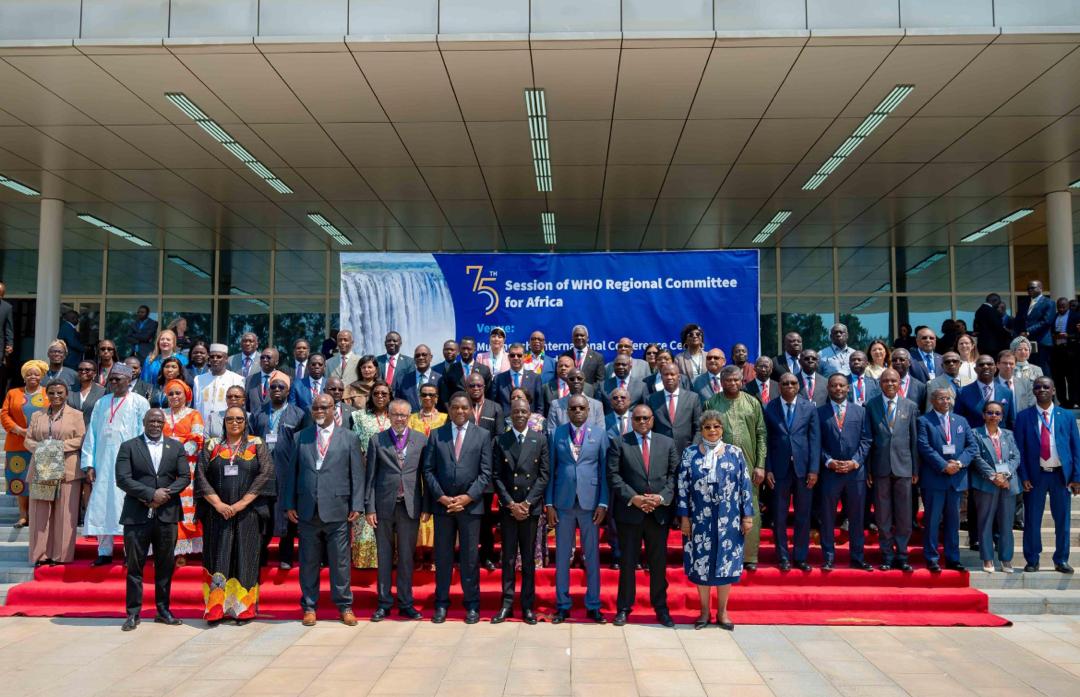
African ministers of health at the 75th session of the World Health Organisation (WHO) Regional Committee for Africa in Lusaka, Zambia, have agreed on a series of measures aimed at strengthening health systems and improving access to care across the continent.
The three-day meeting, attended by ministers from 47 countries, endorsed key resolutions on oral health, blood shortages, rehabilitation services, maternal and child care, malaria, the continent’s health workforce gap, and health security. The decisions are expected to set Africa’s health agenda for the coming years, laying the groundwork for more resilient and inclusive systems.
In his opening remarks, Zambia’s President, Hakainde Hichilema, urged African leaders to draw lessons from the COVID-19 pandemic by harmonising public health regulations, positioning health as a driver of trade and industrialisation, and reinforcing regional cooperation. “Collaboration and a commitment to humanity must guide decisions that enhance health and well-being across the region.”
googletag.cmd.push(function() { googletag.display(‘div-gpt-ad-1718806029429-0’); });
WHO Director-General, Dr Tedros Adhanom Ghebreyesus, described the gathering as “vital” for charting a sustainable future for health in Africa, noting that WHO is working closely with African nations to overcome financial and security challenges while capitalising on the continent’s potential.
WHO Regional Director for Africa, Dr Mohamed Janabi, underscored that health must be seen not as a cost but as a cornerstone of prosperity, urging countries to build accountable, transparent, and people-centred health systems.
Over the course of the meeting, the ministers committed to scaling up services for millions who still lack access. They pledged to improve oral health by 2030, modernise blood supply systems, expand voluntary donations, and strengthen rehabilitation services, which remain unavailable to two-thirds of those in need.
They also focused on transforming care for women, children, and adolescents, critical in a region that accounts for 70 percent of global maternal deaths, and accelerating progress against malaria, which continues to claim thousands of lives annually.
Health security was also high on the agenda, with ministers endorsing new plans to boost early detection and crisis preparedness, following more than 250 public health events reported in Africa in 2024 alone.
The resolutions adopted in Lusaka marked a decisive step towards building stronger, fairer, and more resilient health systems, with leaders emphasising that Africa’s future prosperity is inseparable from the health and well-being of its people.
The post WHO Africa Health Summit concludes with resilience, equity resolutions appeared first on The Sun Nigeria.